
Activated carbon
Key facts
- Installs at
- Whole house or single tap
- Removes
- Chlorine, VOCs, PFAS, Lead, Hydrogen sulfide
- Does not remove
- Nitrate, Iron, Hardness, Arsenic, Bacteria
- Certifications
- NSF/ANSI 42, NSF/ANSI 53, NSF/ANSI 401 what these mean
- Needs
- no drain or power
- Typical cost
- $180 to $550 installed under a sink; $850 to $1,400 installed for a whole-house carbon and sediment system
- Upkeep
- cartridges every 6 to 12 months; whole-house tanks every 2 to 10 years depending on the system and water use
Activated carbon is the most common home filter medium. It reliably removes chlorine, taste and odor, reduces many volatile organic compounds (VOCs) and long-chain PFAS such as PFOA and PFOS, and, in certified carbon block form, reduces lead.
It does not remove nitrate, iron, hardness or arsenic, and it does not disinfect. What a specific carbon filter removes depends on the carbon, how long the water stays in contact with it, and which claims are certified.
How it works
Carbon works by adsorption. NSF describes it as liquid, gas or dissolved matter adhering to the surface of, or in the pores of, an adsorbent medium. Activated carbon has an enormous internal surface, so contaminants stick to it as water flows through.
It comes in two main forms:
- Granular activated carbon (GAC): loose granules, usually in a whole-house tank or a refillable cartridge.
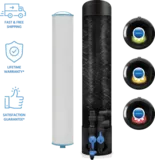
- Carbon block: compressed carbon in a cartridge. The fine pores also trap particles, which is why most lead and cyst certifications are on carbon blocks. The Enpress Pioneer, a 0.5-micron carbon block, is certified by IAPMO to NSF/ANSI 53 for lead, cysts and PFOA/PFOS.
Contact time decides a lot. EPA says GAC performance for PFAS depends on the type of carbon, bed depth, flow rate, which PFAS are present and other organic matter in the water. The carbon also gets used up: the Minnesota Department of Health notes that eventually its ability to bind chemicals is exhausted and it must be changed.
What it removes and what it does not
EPA lists GAC as removing taste- and odor-causing compounds, natural organic matter, VOCs, synthetic organic compounds and disinfection byproduct precursors. For home buyers that means:
- Chlorine, taste and odor: the job carbon does best.
- VOCs: many solvents and pesticides, where certified.
- PFAS: EPA says GAC “can be 100 percent effective for a period of time” on long-chain PFAS, while short-chain PFBS and PFBA “do not adsorb as well.” See how to remove PFAS from water.
- Lead: only filters certified for lead, which are almost always carbon blocks.
- Hydrogen sulfide at low levels. Penn State and the Minnesota Department of Health put the practical limit around 1 mg/L.
Chloramine is a special case. Ordinary carbon needs at least 10 minutes of contact, according to Water Conditioning & Purification, which is why chloramine filters use catalytic carbon.
What carbon does not remove: the Minnesota Department of Health says iron and nitrate “are not attracted to the carbon,” and that activated carbon filters alone cannot remove arsenic. It does not soften hard water or kill bacteria.
Certifications to look for
- NSF/ANSI 42: aesthetic claims such as chlorine, taste and odor, chloramine and particulate. A chlorine claim does not cover chloramine.
- NSF/ANSI 53: health claims such as lead, cysts, VOCs and PFOA/PFOS. EPA’s lead filter tool looks for lead reduction to 5 ppb under NSF/ANSI 53 plus Class I particulate reduction under NSF/ANSI 42.
- NSF/ANSI 401: up to 15 emerging compounds, such as some pharmaceuticals, herbicides and BPA.
Each claim must be named on the listing. For PFAS, EPA notes that certification standards do not yet show a filter will reach EPA’s 4 ppt limits.
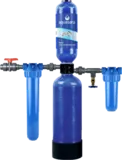
Few whole-house carbon systems are certified. Aquasana’s HealthShield is certified by WQA to NSF/ANSI 53 for five PFAS. Aquasana’s Rhino is “tested to” NSF/ANSI 42 by the maker, which is not certification. See our HealthShield review and Rhino review.
Installation and upkeep
Pitchers, faucet filters and under-sink cartridges need no drain or power. Whole-house carbon goes on the main line, usually after a sediment pre-filter. Most whole-house carbon tanks do not backwash; backwashing models need a drain and an outlet.
Some tanks need preparation. SpringWell’s CF1 manual says the carbon must soak for 48 hours and be flushed before use. After that, the job is replacing carbon on schedule. Running past the rated capacity lets contaminants through, and short-chain PFAS break through first.
Costs
HomeGuide puts an under-sink carbon system at $180 to $550 installed, and a whole-house carbon, mineral and sediment system at $850 to $1,400 installed. Prices checked September 2026:
| System | Price | Upkeep |
|---|---|---|
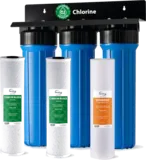
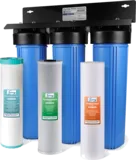
| iSpring WGB32B (cartridges) | $517 | $126 filter pack yearly |
| Aquasana Rhino (carbon tank) | $999 | $148 a year in filters; $949 tank at 10 years |
| SpringWell CF1 (catalytic carbon tank) | $1,160 | About $42 a year in sediment filters; $352 media at 10 years |
| Aquasana HealthShield (certified PFAS) | $2,099 | $1,749 tank about every 2 years |
If you only want better drinking water, a certified under-sink carbon block or reverse osmosis unit costs far less than any whole-house tank. See the cost guide or browse carbon systems in the product finder.
Pros and limits
Pros
- Removes chlorine, taste and odor well.
- Reduces many VOCs and long-chain PFAS.
- Needs no drain, power or chemicals in most designs.
- Widely certified at point of use.
Limits
- Does nothing for nitrate, iron, hardness or arsenic.
- Weak on short-chain PFAS and slow on chloramine.
- Gets used up, so it must be replaced on schedule.
- Few whole-house carbon systems hold health certifications.
Systems in our database that use activated carbon
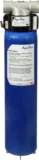
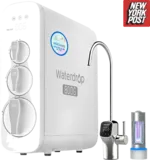
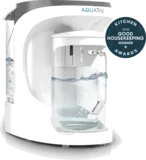
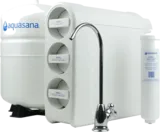
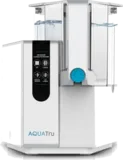
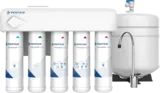
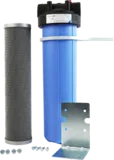
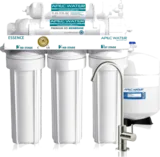
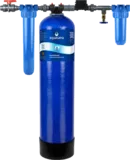
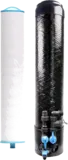
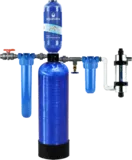


Open these in the system finder
Common questions
Does activated carbon remove PFAS?
Yes, for long-chain PFAS such as PFOA and PFOS. EPA says carbon can be 100 percent effective for a period of time, but short-chain PFAS such as PFBS and PFBA do not adsorb as well and break through sooner. Look for an NSF/ANSI 53 listing that names the PFAS you have.
What is the difference between GAC and a carbon block?
Granular activated carbon (GAC) is loose granules, usually in a tank. A carbon block is compressed carbon in a cartridge, with finer pores that can also trap particles. Most filters certified for lead and cysts are carbon blocks.
How long does a carbon filter last?
It depends on the filter size and what is in your water. Under-sink cartridges usually last 6 to 12 months. Whole-house tanks range from about 2 years (Aquasana HealthShield) to 10 years (Aquasana Rhino, SpringWell CF1), by the makers' ratings.
Can bacteria grow in a carbon filter?
Carbon does not disinfect water, and the Minnesota Department of Health says consistent maintenance and periodic replacement are needed to prevent bacterial build-up. Replace cartridges on schedule, and treat bacteria separately with UV or chlorination.
Sources
- EPA: Overview of drinking water treatment technologies
- EPA: Reducing PFAS in drinking water with treatment technologies
- EPA: Identifying drinking water filters certified to reduce PFAS
- EPA: Consumer tool for identifying filters certified to reduce lead
- Minnesota Department of Health: Water treatment using carbon filters (GAC)
- Minnesota Department of Health: Arsenic in well water
- Penn State Extension: Hydrogen sulfide (rotten egg odor) in water wells
- NSF: NSF/ANSI 42, 53 and 401 filtration systems standards
- WC&P: Chlorine and chloramine removal with activated carbon (Robert Potwora, 2009)
- HomeGuide: Home water filtration system cost (2026)
- iSpring WGB32B product page
- SpringWell CF1 product page
- Aquasana Rhino product page
- Aquasana HealthShield product page
- IAPMO R&T listing: Enpress Pioneer (NSF/ANSI 53, lead, cysts, PFOA/PFOS)