
PFAS
Key facts
- Type of concern
- Health
- EPA limit
- 4 ppt each for PFOA and PFOS (MCL) The April 2024 rule also sets 10 ppt for PFHxS, PFNA and GenX (HFPO-DA) and a hazard index of 1 for mixtures, with compliance by 2029. In May 2026 EPA proposed dropping all but PFOA and PFOS and moving their deadline to 2031. Until that is finalized, the 2024 limits stand. The health goal for PFOA and PFOS is zero.
- Common in
- city water and private wells
- How to test
- City customers can check federal UCMR 5 results on our PFAS lookup for free; a private well needs a certified lab test, preferably EPA Method 533, which typically costs $300 or more per sample.
| Treatment | Effectiveness | Look for |
|---|---|---|
| Reverse osmosis | Works well | NSF/ANSI 58 |
| Activated carbon | Works well | NSF/ANSI 53 |
| Specialty media | Works well | NSF/ANSI 53 |
| Ion exchange softening | Limited | - |
At a glance: PFAS are a large family of long-lasting industrial chemicals, and EPA’s current limit for the two best studied, PFOA and PFOS, is 4 parts per trillion each. You cannot see, smell or taste them, so the only way to know is data: your utility’s results or a lab test of your well. If you have them, a reverse osmosis or carbon filter certified for PFAS reduction at the kitchen tap is the most cost-effective fix for most homes.
Start with the numbers for your own water on our PFAS lookup, which covers every system in EPA’s latest national sampling.
What it is and where it comes from
PFAS (per- and polyfluoroalkyl substances) are thousands of related chemicals used in consumer, commercial and industrial products. EPA describes them as long-lasting chemicals that break down very slowly, which is why many are found in the blood of people and animals worldwide.
EPA’s health table lists discharge from manufacturing and industrial chemical facilities as the typical source of PFOA and PFOS in drinking water. For wells, Connecticut’s environmental agency points to nearby sources such as sites where firefighting foam was used, landfills and factories that used PFAS.
PFAS are common in public water. EPA’s UCMR 5 sampling, with final data released in August 2026, covered 10,313 water systems. About 35% had at least one PFAS detected, and 1,165 averaged above an EPA limit at a sampling point, serving roughly 55 million people. See results by state.
Health and household effects
EPA’s health table links PFOA and PFOS to cardiovascular, immune and liver effects and increased cancer incidence, which is why their health goal is zero. ATSDR lists health effects associated with PFAS exposure as:
- Higher cholesterol levels
- Changes in liver enzymes
- Small decreases in birth weight
- Lower antibody response to some vaccines
- Pregnancy-induced high blood pressure and preeclampsia
- Kidney and testicular cancer (associated with PFOA)
Risk depends on how much you are exposed to and for how long. Drinking and cooking are what count. EPA says only a small amount of PFAS gets into the body through the skin, so showering, bathing and washing dishes “are unlikely to significantly increase your risk.”
PFAS have no household effects you would notice. They do not stain, smell or change taste.
Limits and what they mean
| Compound | EPA limit (2024 rule) | Status in September 2026 |
|---|---|---|
| PFOA | 4 ppt | Kept in the May 2026 proposal; deadline would move from 2029 to 2031 |
| PFOS | 4 ppt | Same as PFOA |
| PFHxS | 10 ppt | Proposed for removal |
| PFNA | 10 ppt | Proposed for removal |
| GenX (HFPO-DA) | 10 ppt | Proposed for removal |
| Mixtures of PFHxS, PFNA, GenX and PFBS | Hazard index of 1 | Proposed for removal |
EPA proposed the rescission and the deadline extension on May 18, 2026, and the comment period closed July 20, 2026. Until EPA finalizes the changes, the 2024 limits are the law, and utilities must finish initial monitoring by 2027. One part per trillion is one nanogram per liter.
WHO has not set a final PFAS guideline value. It says PFAS will be part of the evidence reviews for the fifth edition of its drinking water guidelines.
How to test
City water. Your utility’s results from EPA’s UCMR 5 sampling are on our PFAS lookup, by ZIP code, including which compounds were found. Your annual Consumer Confidence Report may also list PFAS results.
Private well. Nobody has sampled it for you. Use a state-certified lab. Connecticut’s environmental agency says a PFAS test typically costs $300 or more per sample, recommends EPA Method 533 because it covers more compounds, and expects results in two to three weeks. Its advice is to test mainly if a known or suspected PFAS source is nearby. Our well testing guide covers how to order one.
No home test strip can measure PFAS at parts-per-trillion levels.
Treatment options
| Method | How well it works | Certification to look for | Cost range |
|---|---|---|---|
| Reverse osmosis, under-sink or countertop | High, including short-chain PFAS | NSF/ANSI 58 with a PFOA/PFOS claim | $475 to $1,999 (systems we track) |
| Activated carbon, point of use | High for PFOA and PFOS; weaker on short chains | NSF/ANSI 53, PFOA/PFOS or total PFAS | $10 to $100 |
| Activated carbon, whole house | High for long chains when certified | NSF/ANSI 53 system listing | $1,554 to $2,099 for certified systems we track |
| PFAS-selective resin (specialty media) | High capacity | NSF/ANSI 53 | Few home systems; get a quote |
| Softener, sediment filter, UV or boiling | Not effective | None | Not applicable |
Point-of-use costs are Minnesota Department of Health estimates based on 2017 and 2018 quotes; rows marked “systems we track” are prices checked September 2026.
Certification is where marketing gets slippery. A system certified to NSF/ANSI 53 or 58 for PFOA and PFOS has been tested as a finished product. “Tested to NSF standards” or “uses certified media” is not the same thing. NSF/ANSI 53 also has a newer total PFAS claim that covers more compounds. Our PFAS removal guide explains each standard, and the filter finder shows which products hold which claims.
You may not need a whole-house system. Because exposure is mainly through drinking, the Minnesota Department of Health says point-of-use treatment tends to be more economical. Compare the two approaches in whole-house filter vs reverse osmosis, and see our PFAS filter picks if you still want whole-house treatment.
When to call a professional
If a well test shows PFAS above EPA’s limits, call your state health or environmental agency first. It can tell you whether other wells nearby have been tested and what help is available where you live.
Hire a licensed plumber or water treatment professional for whole-house systems, and ask for the certification listing by standard and compound, not just a brochure claim. After any treatment is installed, retest the treated water to confirm it works, and replace filters on the maker’s schedule, sooner if your water has short-chain PFAS.
Systems in our database that address pfas
| System | Evidence | Grade | Price | Certified to | |
|---|---|---|---|---|---|
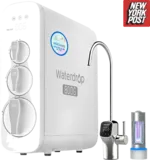 Waterdrop G3P800 (WD-G3P800-W) Waterdrop G3P800 (WD-G3P800-W) |
Certified | B | $999 | NSF/ANSI 58, NSF/ANSI 53, NSF/ANSI 42, NSF/ANSI 372 | Check price |
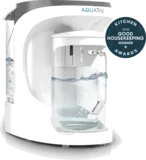 AquaTru Carafe (AT100 series) AquaTru Carafe (AT100 series) |
Certified | B | $375 | NSF/ANSI 42, NSF/ANSI 53, NSF/ANSI 58, NSF/ANSI 401, NSF/ANSI 372 | Check price |
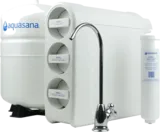 Aquasana SmartFlow Reverse Osmosis (AQ-SFRO2) Aquasana SmartFlow Reverse Osmosis (AQ-SFRO2) |
Certified | B | $190 | NSF/ANSI 42, NSF/ANSI 53, NSF/ANSI 58, NSF/ANSI 401, CSA B483.1, NSF/ANSI 372 | Check price |
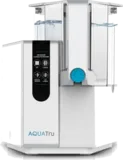 AquaTru Classic (AT2000 series) AquaTru Classic (AT2000 series) |
Certified | B | $475 | NSF/ANSI 42, NSF/ANSI 53, NSF/ANSI 58, NSF/ANSI 401, NSF/ANSI 372 | Check price |
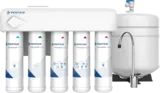 Pentair FreshPoint GRO-575B (161112) Pentair FreshPoint GRO-575B (161112) |
Certified | B | $722 | NSF/ANSI 58, NSF/ANSI 53, NSF/ANSI 42, NSF/ANSI 401, CSA B483.1, NSF/ANSI 53, NSF/ANSI 372 | Check price |
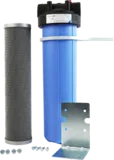 Pentair FloPlus Protect 20BB (150736) Pentair FloPlus Protect 20BB (150736) |
Certified | B | $325 | NSF/ANSI 53 | Check price |
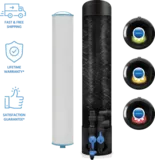 SpringWell LCR-1 SpringWell LCR-1 |
Certified | B | $1,554 | NSF/ANSI 53 | Check price |
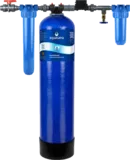 Aquasana HealthShield WH-HS Aquasana HealthShield WH-HS |
Certified | C | $2,099 | NSF/ANSI 53, NSF/ANSI 401, CSA B483.1 | Check price |
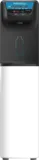 AquaTru Freestanding Model 1 (ATFS-1-W) AquaTru Freestanding Model 1 (ATFS-1-W) |
Certified | C | $1,699 | NSF/ANSI 42, NSF/ANSI 53, NSF/ANSI 58, NSF/ANSI 401 | Check price |
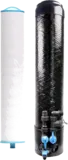 US Water Systems Pioneer (Enpress CTA0840BBBKP5-04C00) US Water Systems Pioneer (Enpress CTA0840BBBKP5-04C00) |
Certified | C | $1,669 | NSF/ANSI 53 (lead, cyst, PFOA/PFOS), NSF P473 (PFOA, PFOS), CSA B483.1 | Check price |
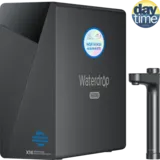 Waterdrop X16 (WD-X16) Waterdrop X16 (WD-X16) |
Lab tested | C | $1,999 | NSF/ANSI 58, NSF/ANSI 42, NSF/ANSI 372 | Check price |
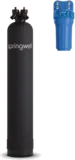 SpringWell CF1 SpringWell CF1 |
Maker claim | B | $1,160 | None | Check price |
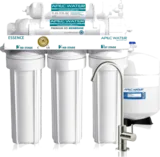 APEC ROES-50 APEC ROES-50 |
Maker claim | B | $231 | NSF/ANSI 58, NSF/ANSI 372 | Check price |
| Home Master TMAFC | Maker claim | B | $330 | None | Check price |
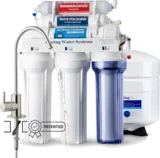 iSpring RCC7AK iSpring RCC7AK |
Maker claim | C | $242 | NSF/ANSI 58 | Check price |
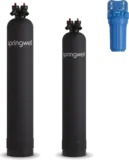 SpringWell CSF1 SpringWell CSF1 |
Maker claim | C | $2,321 | None | Check price |
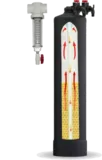 SoftPro Whole House Chlorine+ Filter (upflow catalytic carbon) SoftPro Whole House Chlorine+ Filter (upflow catalytic carbon) |
Maker claim | C | $917 | None | Check price |
 SpringWell PFS-1 SpringWell PFS-1 |
Maker claim | C | $2,910 | None | Check price |
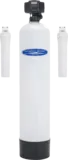 Crystal Quest SMART Whole House Water Filter (CQE-WH-01114) Crystal Quest SMART Whole House Water Filter (CQE-WH-01114) |
Maker claim | D | $1,791 | None | Check price |
Open these in the system finder
Common questions
What is the EPA limit for PFAS in drinking water?
4 parts per trillion each for PFOA and PFOS, under the April 2024 rule. The rule also limits PFHxS, PFNA and GenX to 10 ppt and sets a hazard index for mixtures. EPA proposed in May 2026 to drop those other limits and delay the PFOA and PFOS deadline to 2031; until that is finalized, the 2024 limits stand.
Does boiling water remove PFAS?
No. The Minnesota Department of Health says boiling water will not remove PFAS. Use a filter certified for PFAS reduction instead.
Is it safe to shower in water with PFAS?
EPA says only a small amount of PFAS gets into the body through skin, so showering, bathing and washing dishes are unlikely to significantly increase your risk. Drinking and cooking water matter most.
Do I need a whole-house filter for PFAS?
Usually not. Because drinking is the main exposure route, a certified reverse osmosis or carbon filter at the kitchen tap covers most of the risk, and the Minnesota Department of Health says point-of-use treatment tends to be more economical.
How do I find out if my water has PFAS?
On city water, search your system on our PFAS lookup, which uses EPA's UCMR 5 results. On a private well, order a certified lab test; Connecticut's environmental agency puts the cost at $300 or more per sample.
Sources
- EPA: Per- and polyfluoroalkyl substances (PFAS) national primary drinking water regulation
- EPA: Proposed PFAS rescission rule
- EPA: Proposed PFOA and PFOS compliance extension rule
- EPA: National primary drinking water regulations (health effects table)
- ATSDR: How PFAS impacts your health
- EPA: PFAS explained
- EPA: Meaningful and achievable steps you can take to reduce your risk
- EPA: Fifth Unregulated Contaminant Monitoring Rule (UCMR 5)
- EPA: Reducing PFAS in drinking water with treatment technologies
- EPA: Reducing PFAS in your drinking water with a home filter
- Minnesota Department of Health: PFAS and home treatment of water
- Connecticut DEEP: Private wells and PFAS
- WHO: WHO unveils third addendum to Guidelines for drinking-water quality (June 2026)
- NSF: Certified drinking water treatment units listings (PFOA, PFOS and total PFAS claims)
- Minnesota Department of Health: Home water treatment (costs and options)