
Chloramine
Key facts
- Type of concern
- Household (aesthetic)
- EPA limit
- 4 mg/L (as Cl2) (MCL) Set as a maximum residual disinfectant level (MRDL), the enforceable cap for disinfectants. The health goal (MRDLG) is also 4 mg/L.
- Signs
- chlorine-like taste or smell
- Common in
- city water
- How to test
- Your utility's annual Consumer Confidence Report names the disinfectant for free; a DPD kit that reads free and total chlorine shows chloramine as the gap between the two.
| Treatment | Effectiveness | Look for |
|---|---|---|
| Catalytic carbon | Works well | NSF/ANSI 42 |
| Activated carbon | Partial | NSF/ANSI 42 |
| Reverse osmosis | Partial | NSF/ANSI 42 |
At a glance: Chloramine is a long-lasting disinfectant that many US utilities use instead of chlorine, and it is safe to drink at the levels they use, with the same 4 mg/L EPA cap. It is harder to filter than chlorine. If you want it out, choose catalytic carbon or a filter that lists an NSF/ANSI 42 chloramine claim, because a plain chlorine claim does not cover it.
EPA says more than one in five Americans drinks water treated with chloramines, so if you are on city water there is a fair chance you have it.
What it is and where it comes from
Chloramines form when a utility adds ammonia to chlorine. The common form in drinking water is monochloramine. EPA says utilities have used chloramines since the 1930s, and some switched to them to meet disinfection byproduct limits.
The CDC explains the trade-off. Chloramine lasts longer in the pipes than chlorine, which helps utilities with long distribution systems keep water disinfected to the last tap, and it forms fewer disinfection byproducts. The downside for homeowners is that the same stability makes it harder to remove.
Private wells do not have chloramine. It is only added by public water systems.
Health and household effects
For people drinking it, chloramine at utility levels is not a health concern. EPA says chloraminated water that meets its standards is safe for drinking, cooking and bathing, and the CDC says levels up to 4 mg/L are considered safe. Above EPA’s cap, EPA lists eye and nose irritation, stomach discomfort and anemia as possible effects.
Three situations need special care:
- Fish, reptiles and amphibians. Chloramine harms them, and the CDC notes that letting water sit removes chlorine but not chloramine. Use a tank conditioner labeled for chloramine.
- Home dialysis. EPA says dialysis patients can drink chloraminated water, but the water used in the dialysis machine must have chloramine removed because it contacts the blood.
- Utility switches. Some utilities that use chloramine switch to chlorine for a few weeks to clear biofilm from pipes, according to the CDC. Taste and smell can change while they do.
Limits and what they mean
| Standard | Level | What it is |
|---|---|---|
| EPA maximum residual disinfectant level | 4 mg/L (as Cl2) | Enforceable cap for public water systems |
| EPA health goal (MRDLG) | 4 mg/L | Level with no expected health risk |
| WHO guideline for monochloramine | 3 mg/L | Health-based international guideline |
EPA measures chloramine “as Cl2,” the same way it measures chlorine, so the numbers on your utility report are directly comparable.
How to test
- Read your Consumer Confidence Report. The disinfectant section names chlorine or chloramine and gives the range measured. It is free, and your utility must publish it every year.
- Use a DPD test kit. Buy one that reads both free and total chlorine. Total minus free is combined chlorine, which is the chloramine. If most of the total is combined, your utility uses chloramine.
- Test after a filter. The same kit shows whether a filter is removing chloramine. Test total chlorine before and after it.
Treatment options
The key number is contact time. Robert Potwora’s analysis in Water Conditioning & Purification found monochloramine needs at least two to four times the contact time of free chlorine, and recommends at least 10 minutes of empty bed contact time with ordinary granular carbon. Catalytic carbon cuts that to about 3 minutes.
| Method | How well it works | Certification to look for | Cost range |
|---|---|---|---|
| Catalytic carbon, whole house | High when the tank is sized for contact time | NSF/ANSI 42, chloramine reduction | $1,160 to $1,400 (systems we track) |
| Carbon filter with a chloramine claim, point of use | High | NSF/ANSI 42, chloramine reduction | $10 to $100 |
| Standard activated carbon, whole house | Low to moderate at full flow | NSF/ANSI 42 (confirm chloramine is listed) | $500 to $3,000 |
| Reverse osmosis | Moderate to high, depends on carbon stages | NSF/ANSI 42 chloramine claim plus NSF/ANSI 58 | $300 to $1,500 |
Cost ranges are Minnesota Department of Health estimates based on 2017 and 2018 quotes, low end self-installed and high end professionally installed, unless the row says “systems we track,” which are prices checked September 2026.
Check the certification carefully. NSF/ANSI 42 has a separate claim for chloramine. A product certified for chlorine has not shown it handles chloramine. None of the whole-house chloramine filters we track holds an NSF/ANSI 42 certification for chloramine, so for those you are relying on the maker’s claim and the carbon type. The filter finder shows each product’s actual claims.
Size for your flow. A whole-house tank sized at the edge of your peak flow gives water less contact time than chloramine needs. Our sizing guide shows the contact time arithmetic, and the chloramine vs chlorine guide works through an example.
You may not need a whole-house system. If the goal is better-tasting drinking water, a point-of-use filter with a chloramine claim is far cheaper. See whole-house filter vs reverse osmosis and our city water picks. While you have your utility report open, look up your system on the PFAS lookup too.
When to call a professional
Use a licensed plumber for whole-house carbon tanks, which go on your main line and need a bypass valve.
If you do home dialysis, talk to your care team and dialysis technician before changing anything, and tell them if your utility announces a switch between chlorine and chloramine.
Call your utility if total chlorine on your test kit is well above the range in its annual report, or if taste and smell change suddenly. It can tell you whether it has changed treatment.
Systems in our database that address chloramine
| System | Evidence | Grade | Price | Certified to | |
|---|---|---|---|---|---|
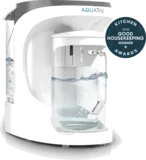 AquaTru Carafe (AT100 series) AquaTru Carafe (AT100 series) |
Certified | B | $375 | NSF/ANSI 42, NSF/ANSI 53, NSF/ANSI 58, NSF/ANSI 401, NSF/ANSI 372 | Check price |
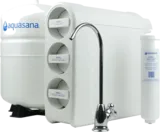 Aquasana SmartFlow Reverse Osmosis (AQ-SFRO2) Aquasana SmartFlow Reverse Osmosis (AQ-SFRO2) |
Certified | B | $190 | NSF/ANSI 42, NSF/ANSI 53, NSF/ANSI 58, NSF/ANSI 401, CSA B483.1, NSF/ANSI 372 | Check price |
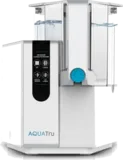 AquaTru Classic (AT2000 series) AquaTru Classic (AT2000 series) |
Certified | B | $475 | NSF/ANSI 42, NSF/ANSI 53, NSF/ANSI 58, NSF/ANSI 401, NSF/ANSI 372 | Check price |
 AquaTru Freestanding Model 1 (ATFS-1-W) AquaTru Freestanding Model 1 (ATFS-1-W) |
Certified | C | $1,699 | NSF/ANSI 42, NSF/ANSI 53, NSF/ANSI 58, NSF/ANSI 401 | Check price |
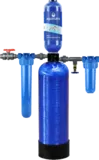 Aquasana Rhino Chloramines WH-1011 (Max Flow WH-1021) Aquasana Rhino Chloramines WH-1011 (Max Flow WH-1021) |
Lab tested | B | $1,399 | None | Check price |
 SpringWell CF1 SpringWell CF1 |
Maker claim | B | $1,160 | None | Check price |
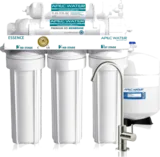 APEC ROES-50 APEC ROES-50 |
Maker claim | B | $231 | NSF/ANSI 58, NSF/ANSI 372 | Check price |
| Home Master TMAFC | Maker claim | B | $330 | None | Check price |
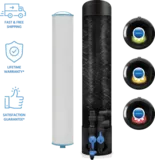 SpringWell LCR-1 SpringWell LCR-1 |
Maker claim | B | $1,554 | NSF/ANSI 53 | Check price |
 Kind Water Systems S-500 Kind Water Systems S-500 |
Maker claim | C | $1,471 | None | Check price |
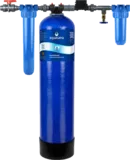 Aquasana HealthShield WH-HS Aquasana HealthShield WH-HS |
Maker claim | C | $2,099 | NSF/ANSI 53, NSF/ANSI 401, CSA B483.1 | Check price |
 Kind Water Systems E-1000 Kind Water Systems E-1000 |
Maker claim | C | $976 | None | Check price |
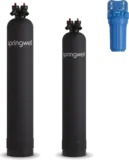 SpringWell CSF1 SpringWell CSF1 |
Maker claim | C | $2,321 | None | Check price |
 RKIN CS8 / CS9 / CS10 / CS13 RKIN CS8 / CS9 / CS10 / CS13 |
Maker claim | C | $938 | None | Check price |
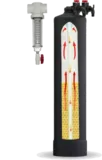 SoftPro Whole House Chlorine+ Filter (upflow catalytic carbon) SoftPro Whole House Chlorine+ Filter (upflow catalytic carbon) |
Maker claim | C | $917 | None | Check price |
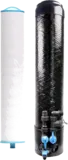 US Water Systems Pioneer (Enpress CTA0840BBBKP5-04C00) US Water Systems Pioneer (Enpress CTA0840BBBKP5-04C00) |
Maker claim | C | $1,669 | NSF/ANSI 53 (lead, cyst, PFOA/PFOS), NSF P473 (PFOA, PFOS), CSA B483.1 | Check price |
 US Water Systems Matrixx Catalytic Carbon (081-MXF-CX) US Water Systems Matrixx Catalytic Carbon (081-MXF-CX) |
Maker claim | C | $1,326 | None | Check price |
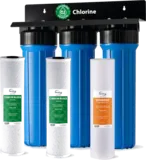 iSpring WGB32B iSpring WGB32B |
Maker claim | D | $517 | None | Check price |
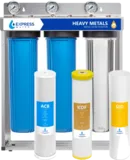 Express Water WH300SCKS Express Water WH300SCKS |
Maker claim | D | $548 | None | Check price |
 Crystal Quest SMART Whole House Water Filter (CQE-WH-01114) Crystal Quest SMART Whole House Water Filter (CQE-WH-01114) |
Maker claim | D | $1,791 | None | Check price |
Open these in the system finder
Common questions
Is chloramine safe to drink?
Yes. EPA says water with chloramines that meets its standards is safe for drinking, cooking and bathing, and the CDC says levels up to 4 mg/L are considered safe.
Will a regular carbon filter remove chloramine?
Only slowly. Chloramine needs several times the contact time of chlorine. Catalytic carbon, or a filter that specifically lists an NSF/ANSI 42 chloramine claim, is the reliable choice.
Can I let water sit to get rid of chloramine?
No. The CDC says letting water sit for days removes chlorine but not chloramine. For fish tanks, use a conditioner labeled for chloramine.
Is chloraminated water safe for home dialysis?
It is safe to drink, but chloramine must be removed from the water used in the dialysis machine because it contacts the blood. Confirm your setup with your care team, especially if your utility has just switched.
Sources
- EPA: Chloramines in drinking water
- EPA: National primary drinking water regulations (MRDL table)
- CDC: Water disinfection with chlorine and chloramine
- EPA: Can chloraminated or chlorinated water be used for dialysis or aquariums?
- WHO: Guidelines for drinking-water quality, 4th edition incorporating the first and second addenda
- Water Conditioning & Purification: Chloramine reduction (contact time)
- NSF: Certified drinking water treatment units listings (reduction claims)
- EPA: Consumer Confidence Report information for consumers
- Minnesota Department of Health: Home water treatment (costs and options)