
Nitrate
Key facts
- Type of concern
- Health
- EPA limit
- 10 mg/L as nitrogen (MCL) Nitrite has a separate MCL of 1 mg/L as nitrogen. Some labs report nitrate as the nitrate ion, where 10 mg/L as nitrogen equals about 44 mg/L.
- Common in
- private wells
- How to test
- A certified lab nitrate test, $35 at Wisconsin's state lab or in Penn State's $70 package with bacteria; test every year and before giving well water to an infant.
| Treatment | Effectiveness | Look for |
|---|---|---|
| Reverse osmosis | Works well | NSF/ANSI 58 |
| Specialty media | Works well | - |
| Ion exchange softening | Limited | - |
| Activated carbon | Limited | - |
At a glance: Nitrate is a nitrogen compound from fertilizer, septic systems and animal waste that seeps into groundwater, especially shallow wells. Above EPA’s limit of 10 mg/L (as nitrogen), it can make infants under six months seriously ill by interfering with how their blood carries oxygen. Test your well every year and before a baby drinks the water or formula made with it. Boiling makes it worse. A reverse osmosis unit certified for nitrate at the kitchen tap is the usual fix.
Public water systems must meet the 10 mg/L limit. Nitrate is mostly a private well issue.
What it is and where it comes from
The Minnesota Department of Health names the sources: fertilizers used on crops, yards, gardens and golf courses, discharge from sewage systems, and animal waste. EPA’s health table lists runoff from fertilizer use and leaking septic tanks. Nitrate dissolves easily and moves with water down into aquifers.
Some wells are more exposed than others. MDH says shallow wells and wells in sand, karst and fractured rock aquifers are particularly vulnerable. EPA’s guidance for private wells lists nitrate among the tests to add if your well is near farms or orchards.
It is one of the most common health problems in domestic wells. A USGS study of more than 2,000 domestic wells found nitrate above the EPA limit in roughly 5 to 7 percent of them.
Health and household effects
Nitrate is a health issue with no household signs: it has no color, taste or smell at levels that matter.
The main risk is to infants. EPA says infants below six months who drink water with nitrate above the limit could become seriously ill and may die. MDH explains that too much nitrate “can affect how blood carries oxygen and cause methemoglobinemia (also known as a blue baby syndrome).”
Nitrate is also a marker. MDH notes that nitrate above 1 mg/L in well water suggests additional testing may be a good idea.
Limits and what they mean
| Standard | Level | What it means |
|---|---|---|
| EPA MCL and health goal, nitrate | 10 mg/L as nitrogen | Enforceable limit for public systems; protects infants |
| EPA MCL and health goal, nitrite | 1 mg/L as nitrogen | Separate limit for nitrite |
| WHO guideline, nitrate | 50 mg/L as nitrate (about 11 as nitrogen) | Protects bottle-fed infants |
| MDH marker for more testing | 1 mg/L | MDH suggests additional testing above this level |
Check the units on your lab report. “Nitrate as N” or “nitrate-nitrogen” is compared with EPA’s 10 mg/L. “Nitrate as NO3” uses a different scale, where 10 mg/L as nitrogen equals about 44 mg/L.
EPA’s health goal equals its enforceable limit for nitrate, 10 mg/L. Private wells are not covered by the rule, so the owner decides what to do with a result.
How to test
Use a state-certified lab. Wisconsin’s state lab charges $35 for nitrate and Penn State includes it in its $70 package with coliform bacteria, pH and TDS. MDH says to test for nitrate every year, and the CDC and EPA both include it in the annual well test.
Test again right away if you are pregnant, a baby is coming, or there has been flooding or land disturbance near the well, as the CDC advises. Our well testing guide covers labs and sampling.
Treatment options
| Method | How well it works | Certification to look for | Cost range |
|---|---|---|---|
| Reverse osmosis, point of use | High | NSF/ANSI 58, nitrate/nitrite reduction | $300 to $1,500 |
| Distillation, point of use | High | NSF/ANSI 62 | $300 to $1,200 |
| Nitrate-selective anion exchange (specialty media), whole house | High if maintained | None common; resins may be certified (MDH) | $1,500 to $2,500 |
| Water softener | Not effective | Not applicable | Not a nitrate fix |
| Activated carbon | Not effective | Not applicable | Not a nitrate fix |
| Boiling | Makes it worse | Not applicable | Not applicable |
Cost ranges are Minnesota Department of Health estimates based on 2017 and 2018 quotes, low end self-installed and high end professionally installed.
Point of use is usually right. Nitrate matters for what you drink and mix into formula, so a certified RO unit at the kitchen tap covers the risk for far less than whole-house treatment. Wisconsin’s health department lists reverse osmosis certified to NSF/ANSI 58 as the device for nitrate. See whole-house filter vs reverse osmosis, and use the filter finder to check which RO systems list a nitrate claim.
Anion exchange has trade-offs. MDH notes it can make water more corrosive, a concern with copper or lead plumbing, and if not maintained it can release a high concentration of the contaminant back into the water.
When to call a professional
Call your county or state health department if nitrate is above 10 mg/L, and use bottled water for infant formula until the water is treated and retested.
Call a licensed well contractor if levels are high or rising, to check whether the well’s construction or depth is part of the problem. Wisconsin’s health department notes that drilling a new well is another option for a contaminated private well. If you choose whole-house anion exchange, have a water treatment professional size it and set up maintenance, and test for lead and copper afterward.
Systems in our database that address nitrate
| System | Evidence | Grade | Price | Certified to | |
|---|---|---|---|---|---|
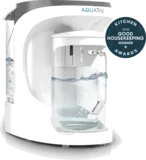 AquaTru Carafe (AT100 series) AquaTru Carafe (AT100 series) |
Certified | B | $375 | NSF/ANSI 42, NSF/ANSI 53, NSF/ANSI 58, NSF/ANSI 401, NSF/ANSI 372 | Check price |
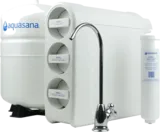 Aquasana SmartFlow Reverse Osmosis (AQ-SFRO2) Aquasana SmartFlow Reverse Osmosis (AQ-SFRO2) |
Certified | B | $190 | NSF/ANSI 42, NSF/ANSI 53, NSF/ANSI 58, NSF/ANSI 401, CSA B483.1, NSF/ANSI 372 | Check price |
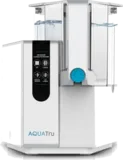 AquaTru Classic (AT2000 series) AquaTru Classic (AT2000 series) |
Certified | B | $475 | NSF/ANSI 42, NSF/ANSI 53, NSF/ANSI 58, NSF/ANSI 401, NSF/ANSI 372 | Check price |
 AquaTru Freestanding Model 1 (ATFS-1-W) AquaTru Freestanding Model 1 (ATFS-1-W) |
Certified | C | $1,699 | NSF/ANSI 42, NSF/ANSI 53, NSF/ANSI 58, NSF/ANSI 401 | Check price |
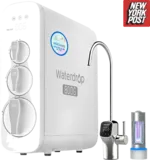 Waterdrop G3P800 (WD-G3P800-W) Waterdrop G3P800 (WD-G3P800-W) |
Lab tested | B | $999 | NSF/ANSI 58, NSF/ANSI 53, NSF/ANSI 42, NSF/ANSI 372 | Check price |
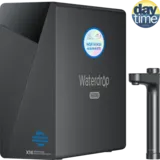 Waterdrop X16 (WD-X16) Waterdrop X16 (WD-X16) |
Lab tested | C | $1,999 | NSF/ANSI 58, NSF/ANSI 42, NSF/ANSI 372 | Check price |
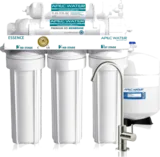 APEC ROES-50 APEC ROES-50 |
Maker claim | B | $231 | NSF/ANSI 58, NSF/ANSI 372 | Check price |
Open these in the system finder
Common questions
Can I boil water to remove nitrate?
No. MDH warns that boiling makes nitrate more concentrated, because water evaporates and the nitrate stays behind.
Is nitrate dangerous for adults?
EPA's limit is set to protect infants under six months, who are the most vulnerable. MDH focuses its warnings on infants; if you are pregnant or have a health condition, ask your doctor about your well results.
What level of nitrate means I should test more?
MDH says nitrate above 1 mg/L in well water suggests additional testing may be a good idea. Nitrate comes from fertilizer, septic systems and animal waste, so a detectable level shows water from those sources is reaching your well.
Will a water softener remove nitrate?
No. A standard softener exchanges calcium and magnesium for sodium. Nitrate needs reverse osmosis, distillation or a nitrate-selective anion exchange system.
Sources
- EPA: National primary drinking water regulations (nitrate and nitrite)
- Minnesota Department of Health: Nitrate in drinking water
- WHO: Guidelines for drinking-water quality, 4th edition incorporating the first and second addenda
- USGS: Quality of water from domestic wells in principal aquifers, 1991-2004
- CDC: Guidelines for testing well water
- Minnesota Department of Health: Home water treatment (costs and options)
- Wisconsin Department of Health Services: Treatment devices for private well contaminants
- Wisconsin State Laboratory of Hygiene: Test prices (effective July 1, 2026)
- Penn State Agricultural Analytical Services Lab: Drinking water test packages
- NSF: Certified drinking water treatment units listings (NSF/ANSI 58 nitrate/nitrite claim)
- EPA: Protect your home's water (private wells)