
Lead
Key facts
- Type of concern
- Health
- EPA limit
- 15 µg/L (0.015 mg/L) (Action level) Drops to 10 µg/L on November 1, 2027, under the Lead and Copper Rule Improvements. The action level is a trigger for utility action, not a safe level: the health goal (MCLG) is zero.
- Common in
- city water and private wells
- How to test
- A certified lab test of a first-draw sample (and ideally a flushed sample too); EPA puts testing at $20 to $100, Wisconsin's state lab charges $38, and Penn State's first-draw and running lead package is $125.
| Treatment | Effectiveness | Look for |
|---|---|---|
| Activated carbon | Works well | NSF/ANSI 53 |
| Reverse osmosis | Works well | NSF/ANSI 58 |
| Specialty media | Partial | - |
At a glance: Lead gets into drinking water mostly from lead service lines, solder and brass fixtures, not from the water source itself. There is no known safe level for children, and EPA’s health goal is zero. If your home might have lead plumbing, test a first-draw sample, drink and cook with cold water only, and use a filter certified to NSF/ANSI 53 or 58 for lead at the kitchen tap.
You cannot see, smell or taste lead in water. Testing is the only way to know.
What it is and where it comes from
Lead is a metal that dissolves into water as it sits in, or flows through, plumbing that contains it. The CDC names lead pipes, faucets and plumbing fixtures as the most common sources. EPA says the most significant source in homes that have one is a lead service line, the pipe connecting the house to the water main.
Age of the house is a strong clue. EPA says homes built before 1986 are more likely to have lead pipes, fixtures and solder. Newer materials can still contain small amounts: under the Safe Drinking Water Act, “lead-free” means a weighted average of no more than 0.25% lead on wetted pipe and fixture surfaces, and 0.2% in solder.
Water chemistry matters too. EPA notes lead leaches more when water is acidic or low in minerals. That makes lead a concern on private wells with low pH, not just in older cities. EPA’s health table also lists erosion of natural deposits as a source.
Health and household effects
Lead is a health problem, not a household nuisance. It causes no stains, smell or taste at the levels found in tap water.
EPA describes the effects:
- Children: behavior and learning problems, lower IQ and hyperactivity, slowed growth, hearing problems and anemia, even at low levels.
- Pregnancy: lead crosses the placenta and can reduce fetal growth and cause premature birth.
- Adults: increased blood pressure, and reduced kidney and reproductive function.
The CDC says no safe blood lead level has been identified for young children, and that infants who drink formula made with lead-contaminated tap water may be at higher risk. A blood lead test is the way to find out whether someone has been exposed.
Limits and what they mean
| Standard | Level | What it means |
|---|---|---|
| EPA health goal (MCLG) | Zero | No level is considered safe |
| EPA action level, current | 15 µg/L | If more than 10% of a utility’s tap samples exceed it, the utility must act |
| EPA action level from November 1, 2027 | 10 µg/L | Set by the Lead and Copper Rule Improvements |
| WHO guideline | 10 µg/L | Provisional international guideline |
The action level is a trigger for corrosion control, public notice and pipe replacement by the utility. It is not a line between safe and unsafe water in your home. The 2024 Lead and Copper Rule Improvements, finalized in October 2024, also require most utilities to replace lead service lines within 10 years. Private wells are not covered by any of these rules.
How to test
Lead levels vary with how long water has been sitting, so how you sample matters.
- First-draw sample: collect the first water out of the tap after it has sat unused for at least six hours, usually overnight. This shows the worst case.
- Flushed sample: collect after running the water. Comparing the two shows whether the lead is coming from the fixture and nearby pipes or from further back, such as a service line.
EPA puts the cost of a lead test at $20 to $100. Wisconsin’s state lab charges $38, and Penn State’s lab tests first-draw and running water together for $125. Use a state-certified lab, and ask your utility first: it can tell you what your service line is made of. For wells, add pH and copper, which Penn State bundles in its corrosivity package. Our well testing guide covers labs and sampling.
Treatment options
Because lead usually enters inside your plumbing, the most reliable protection is at the tap you drink from.
| Method | How well it works | Certification to look for | Cost range |
|---|---|---|---|
| Carbon filter certified for lead (activated carbon): pitcher, faucet or under-sink | High | NSF/ANSI 53 lead reduction plus NSF/ANSI 42 Class I particulate | $10 to $100 |
| Reverse osmosis | High | NSF/ANSI 58 lead reduction | $300 to $1,500 |
| Distillation | High | NSF/ANSI 62 | $300 to $1,200 |
| Whole-house filter | Low for lead added by indoor plumbing | Rarely certified for lead | Not recommended for lead alone |
| Neutralizer for acidic well water (specialty media) | Reduces corrosion; does not remove lead | None | Get a quote |
Cost ranges are Minnesota Department of Health estimates based on 2017 and 2018 quotes, low end self-installed and high end professionally installed.
EPA’s consumer tool lists pitcher and point-of-use filters certified to reduce lead to 5 ppb or less. Use cold water for drinking, cooking and baby formula, because hot water can carry more lead, and replace filter cartridges on schedule. The filter finder shows which products we track hold a lead claim, and whole-house filter vs reverse osmosis explains why point of use usually wins for metals.
If you are also concerned about PFAS or other contaminants, check your system on the PFAS lookup: a certified RO unit can address several problems at one tap.
When to call a professional
Call your water utility to find out whether you have a lead service line and when it is scheduled for replacement. Replacing the line is the permanent fix.
Hire a licensed plumber to replace lead solder, old brass fixtures or galvanized pipes that sat downstream of a lead line. On a well with acidic water, a water treatment professional can size a neutralizer, and you should retest lead and copper afterward.
If you are pregnant, or a child in your home may have been exposed, ask your doctor about a blood lead test and contact your local health department.
Systems in our database that address lead
| System | Evidence | Grade | Price | Certified to | |
|---|---|---|---|---|---|
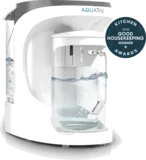 AquaTru Carafe (AT100 series) AquaTru Carafe (AT100 series) |
Certified | B | $375 | NSF/ANSI 42, NSF/ANSI 53, NSF/ANSI 58, NSF/ANSI 401, NSF/ANSI 372 | Check price |
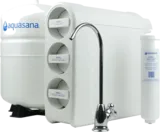 Aquasana SmartFlow Reverse Osmosis (AQ-SFRO2) Aquasana SmartFlow Reverse Osmosis (AQ-SFRO2) |
Certified | B | $190 | NSF/ANSI 42, NSF/ANSI 53, NSF/ANSI 58, NSF/ANSI 401, CSA B483.1, NSF/ANSI 372 | Check price |
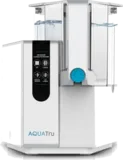 AquaTru Classic (AT2000 series) AquaTru Classic (AT2000 series) |
Certified | B | $475 | NSF/ANSI 42, NSF/ANSI 53, NSF/ANSI 58, NSF/ANSI 401, NSF/ANSI 372 | Check price |
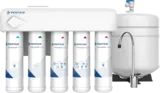 Pentair FreshPoint GRO-575B (161112) Pentair FreshPoint GRO-575B (161112) |
Certified | B | $722 | NSF/ANSI 58, NSF/ANSI 53, NSF/ANSI 42, NSF/ANSI 401, CSA B483.1, NSF/ANSI 53, NSF/ANSI 372 | Check price |
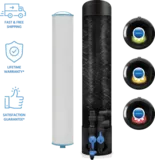 SpringWell LCR-1 SpringWell LCR-1 |
Certified | B | $1,554 | NSF/ANSI 53 | Check price |
 AquaTru Freestanding Model 1 (ATFS-1-W) AquaTru Freestanding Model 1 (ATFS-1-W) |
Certified | C | $1,699 | NSF/ANSI 42, NSF/ANSI 53, NSF/ANSI 58, NSF/ANSI 401 | Check price |
 US Water Systems Pioneer (Enpress CTA0840BBBKP5-04C00) US Water Systems Pioneer (Enpress CTA0840BBBKP5-04C00) |
Certified | C | $1,669 | NSF/ANSI 53 (lead, cyst, PFOA/PFOS), NSF P473 (PFOA, PFOS), CSA B483.1 | Check price |
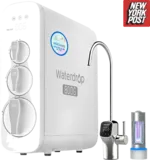 Waterdrop G3P800 (WD-G3P800-W) Waterdrop G3P800 (WD-G3P800-W) |
Lab tested | B | $999 | NSF/ANSI 58, NSF/ANSI 53, NSF/ANSI 42, NSF/ANSI 372 | Check price |
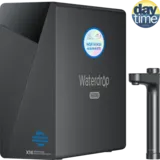 Waterdrop X16 (WD-X16) Waterdrop X16 (WD-X16) |
Lab tested | C | $1,999 | NSF/ANSI 58, NSF/ANSI 42, NSF/ANSI 372 | Check price |
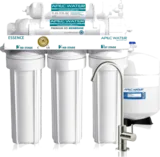 APEC ROES-50 APEC ROES-50 |
Maker claim | B | $231 | NSF/ANSI 58, NSF/ANSI 372 | Check price |
| Home Master TMAFC | Maker claim | B | $330 | None | Check price |
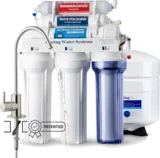 iSpring RCC7AK iSpring RCC7AK |
Maker claim | C | $242 | NSF/ANSI 58 | Check price |
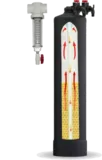 SoftPro Whole House Chlorine+ Filter (upflow catalytic carbon) SoftPro Whole House Chlorine+ Filter (upflow catalytic carbon) |
Maker claim | C | $917 | None | Check price |
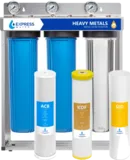 Express Water WH300SCKS Express Water WH300SCKS |
Maker claim | D | $548 | None | Check price |
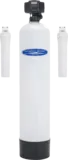 Crystal Quest SMART Whole House Water Filter (CQE-WH-01114) Crystal Quest SMART Whole House Water Filter (CQE-WH-01114) |
Maker claim | D | $1,791 | None | Check price |
Open these in the system finder
Common questions
Is any amount of lead in water safe?
EPA's health goal for lead is zero, and EPA and the CDC say there is no known safe level of lead in a child's blood. The 15 µg/L action level is the point where utilities must take action, not a safe threshold.
Does boiling water remove lead?
No. EPA and the CDC both say boiling does not remove lead. Use cold water for drinking and cooking, and a filter certified for lead reduction if your home may have lead.
Will a whole-house filter protect me from lead?
Often not. Lead usually comes from the service line, solder and fixtures, and anything downstream of a whole-house filter can still add lead. A filter certified to NSF/ANSI 53 for lead at the kitchen tap is the standard advice.
How do I know if I have a lead service line?
Ask your water utility. Under EPA's lead rules, utilities must inventory service line materials and notify customers whose lines are lead or of unknown material.
Sources
- EPA: Basic information about lead in drinking water
- EPA: Lead and Copper Rule Improvements
- EPA: Lead and Copper Rule
- EPA: National primary drinking water regulations (health effects table)
- CDC: Lead in drinking water
- EPA: Consumer tool for identifying point-of-use and pitcher filters certified to reduce lead
- EPA: What home treatment devices are used to control lead in drinking water?
- WHO: Guidelines for drinking-water quality, 4th edition incorporating the first and second addenda
- Wisconsin State Laboratory of Hygiene: Test prices (effective July 1, 2026)
- Penn State Agricultural Analytical Services Lab: Drinking water test packages
- Wisconsin Department of Health Services: Treatment devices for private well contaminants
- Minnesota Department of Health: Home water treatment (costs and options)