
Chlorine
Key facts
- Type of concern
- Household (aesthetic)
- EPA limit
- 4 mg/L (as Cl2) (MCL) Set as a maximum residual disinfectant level (MRDL), the enforceable cap for disinfectants. The health goal (MRDLG) is also 4 mg/L.
- Signs
- bleach or swimming pool smell; chemical taste
- Common in
- city water
- How to test
- Your utility's annual Consumer Confidence Report lists the chlorine residual for free, and a DPD test kit or strips from a pool or hardware store measure free and total chlorine at the tap.
| Treatment | Effectiveness | Look for |
|---|---|---|
| Activated carbon | Works well | NSF/ANSI 42 |
| Catalytic carbon | Works well | NSF/ANSI 42 |
| KDF media | Partial | - |
| Reverse osmosis | Works well | NSF/ANSI 42 |
At a glance: Chlorine is the disinfectant many US utilities add to kill germs, and at the levels they use it is considered safe to drink. EPA caps it at 4 mg/L. If you dislike the taste or smell, a carbon filter certified to NSF/ANSI 42 for chlorine reduction removes it, and for drinking water alone that can cost under $100.
If you are on a private well, you only have chlorine in your water if you or a contractor add it, for example to control bacteria or iron.
What it is and where it comes from
Utilities add chlorine at the treatment plant and keep a small amount, called a residual, in the water all the way to your tap so germs cannot regrow in the pipes. The CDC notes that chlorine gets used up faster in the pipes than chloramine, the other common disinfectant, and forms more disinfection byproducts.
Some utilities that normally use chloramine switch to chlorine for a few weeks to clear biofilm from their pipes, according to the CDC. If your water suddenly smells more like a pool, that is one common reason, and your utility can confirm it.
To see what your utility uses and at what level, read its Consumer Confidence Report. EPA requires community water systems to send one to customers every year. See our chloramine vs chlorine guide for how to tell the two apart.
Health and household effects
At normal levels, chlorine is a taste and smell issue, not a health one. The CDC says chlorine levels up to 4 mg/L “are considered safe in drinking water.” EPA lists eye and nose irritation and stomach discomfort as possible effects when water goes above its 4 mg/L cap.
The larger health question is disinfection byproducts. When chlorine reacts with natural organic matter it forms compounds such as trihalomethanes (TTHMs) and haloacetic acids (HAA5). EPA regulates these separately, at 80 µg/L for TTHMs and 60 µg/L for HAA5. It links TTHMs above the limit to liver, kidney or nervous system problems, and both groups to increased cancer risk. Your utility must monitor and report them.
Two groups need chlorine fully removed:
- Fish, reptiles and amphibians. The CDC says they absorb water directly into their blood. Pet stores sell products that neutralize chlorine for tanks.
- Home dialysis. Chlorine must be removed from dialysis water because it contacts the blood, according to EPA. Drinking the water is fine.
Limits and what they mean
| Standard | Level | What it is |
|---|---|---|
| EPA maximum residual disinfectant level | 4 mg/L | Enforceable cap for public water systems |
| EPA health goal (MRDLG) | 4 mg/L | Level with no expected health risk |
| EPA limit for TTHMs | 80 µg/L | Enforceable byproduct limit |
| EPA limit for HAA5 | 60 µg/L | Enforceable byproduct limit |
| WHO guideline for free chlorine | 5 mg/L | Health-based international guideline |
WHO notes that some people can taste chlorine at levels as low as 0.3 mg/L, well below any health limit. That is why water can be safe and still taste of chlorine.
How to test
For city water, start with the free option: your Consumer Confidence Report lists the chlorine residual range measured in your system.
To check your own tap, use a DPD test kit or test strips, the same kind sold for pools and hot tubs. Buy one that reads both free and total chlorine. If total chlorine is much higher than free chlorine, the difference is combined chlorine, which usually means your utility uses chloramine, and the filter advice changes.
A test kit is also the simplest way to confirm a new filter is working: test before and after it.
Treatment options
Chlorine is one of the easiest things to remove from water. Carbon reacts with it quickly, so even small filters work well.
| Method | How well it works | Certification to look for | Cost range |
|---|---|---|---|
| Activated carbon, pitcher, faucet or under-sink | High | NSF/ANSI 42, chlorine reduction | $10 to $100 |
| Activated carbon, whole house | High | NSF/ANSI 42, chlorine reduction | $500 to $3,000 |
| Catalytic carbon, whole house | High, also removes chloramine | NSF/ANSI 42, chlorine and chloramine claims | $1,160 to $1,400 (systems we track) |
| KDF media, usually with carbon | Moderate on its own | NSF/ANSI 177 for shower filters | Part of combined systems |
| Reverse osmosis | High (carbon stages do the work) | NSF/ANSI 42 chlorine claim on the system | $300 to $1,500 |
Cost ranges are Minnesota Department of Health estimates based on 2017 and 2018 quotes, low end self-installed and high end professionally installed, unless the row says “systems we track,” which are prices checked September 2026.
You may not need a whole-house system. If the only complaint is the taste of drinking water, a certified pitcher or faucet filter solves it. Whole-house carbon is worth considering when you also notice the smell in the shower, or when your utility report shows other things you want to reduce, such as PFAS. Check your system on our PFAS lookup before you decide, and see whole-house filter vs reverse osmosis for the trade-offs.
Read the claim, not the box. NSF/ANSI 42 has separate claims for chlorine and chloramine. A chlorine claim says nothing about chloramine. The filter finder shows which claims each product we track actually holds, and our city water picks compare whole-house options.
When to call a professional
Whole-house carbon tanks and cartridge housings go on your main water line. If you are not comfortable shutting off the main and cutting into the pipe, hire a licensed plumber, especially if your line is copper that needs soldering.
Call your utility, not a filter company, if the chlorine smell changes suddenly or the water looks or tastes different in other ways. The utility can tell you whether it has changed treatment and what the current residual is.
On a private well with a chlorine injection system, have a water treatment professional set and check the dose. Too little does not disinfect, and too much gives the water a strong taste.
Systems in our database that address chlorine
| System | Evidence | Grade | Price | Certified to | |
|---|---|---|---|---|---|
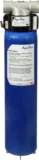 Aqua-Pure (formerly 3M Aqua-Pure, Solventum) AP904 Aqua-Pure (formerly 3M Aqua-Pure, Solventum) AP904 |
Certified | B | $432 | NSF/ANSI 42 | Check price |
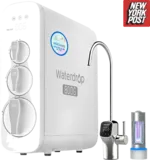 Waterdrop G3P800 (WD-G3P800-W) Waterdrop G3P800 (WD-G3P800-W) |
Certified | B | $999 | NSF/ANSI 58, NSF/ANSI 53, NSF/ANSI 42, NSF/ANSI 372 | Check price |
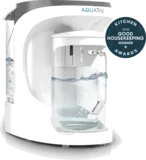 AquaTru Carafe (AT100 series) AquaTru Carafe (AT100 series) |
Certified | B | $375 | NSF/ANSI 42, NSF/ANSI 53, NSF/ANSI 58, NSF/ANSI 401, NSF/ANSI 372 | Check price |
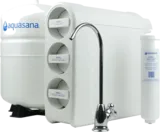 Aquasana SmartFlow Reverse Osmosis (AQ-SFRO2) Aquasana SmartFlow Reverse Osmosis (AQ-SFRO2) |
Certified | B | $190 | NSF/ANSI 42, NSF/ANSI 53, NSF/ANSI 58, NSF/ANSI 401, CSA B483.1, NSF/ANSI 372 | Check price |
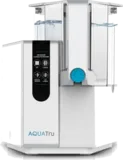 AquaTru Classic (AT2000 series) AquaTru Classic (AT2000 series) |
Certified | B | $475 | NSF/ANSI 42, NSF/ANSI 53, NSF/ANSI 58, NSF/ANSI 401, NSF/ANSI 372 | Check price |
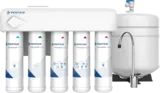 Pentair FreshPoint GRO-575B (161112) Pentair FreshPoint GRO-575B (161112) |
Certified | B | $722 | NSF/ANSI 58, NSF/ANSI 53, NSF/ANSI 42, NSF/ANSI 401, CSA B483.1, NSF/ANSI 53, NSF/ANSI 372 | Check price |
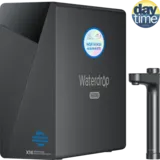 Waterdrop X16 (WD-X16) Waterdrop X16 (WD-X16) |
Certified | C | $1,999 | NSF/ANSI 58, NSF/ANSI 42, NSF/ANSI 372 | Check price |
 AquaTru Freestanding Model 1 (ATFS-1-W) AquaTru Freestanding Model 1 (ATFS-1-W) |
Certified | C | $1,699 | NSF/ANSI 42, NSF/ANSI 53, NSF/ANSI 58, NSF/ANSI 401 | Check price |
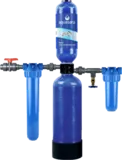 Aquasana Rhino WH-1000 (Max Flow WH-1010) Aquasana Rhino WH-1000 (Max Flow WH-1010) |
Lab tested | B | $999 | None | Check price |
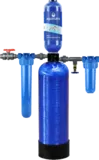 Aquasana Rhino Chloramines WH-1011 (Max Flow WH-1021) Aquasana Rhino Chloramines WH-1011 (Max Flow WH-1021) |
Lab tested | B | $1,399 | None | Check price |
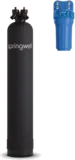 SpringWell CF1 SpringWell CF1 |
Maker claim | B | $1,160 | None | Check price |
| Home Master HMF3SdgFeC | Maker claim | B | $550 | None | Check price |
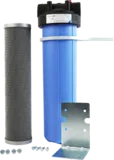 Pentair FloPlus Protect 20BB (150736) Pentair FloPlus Protect 20BB (150736) |
Maker claim | B | $325 | NSF/ANSI 53 | Check price |
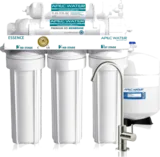 APEC ROES-50 APEC ROES-50 |
Maker claim | B | $231 | NSF/ANSI 58, NSF/ANSI 372 | Check price |
| Home Master TMAFC | Maker claim | B | $330 | None | Check price |
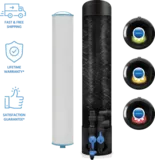 SpringWell LCR-1 SpringWell LCR-1 |
Maker claim | B | $1,554 | NSF/ANSI 53 | Check price |
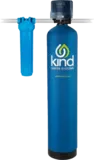 Kind Water Systems S-500 Kind Water Systems S-500 |
Maker claim | C | $1,471 | None | Check price |
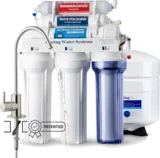 iSpring RCC7AK iSpring RCC7AK |
Maker claim | C | $242 | NSF/ANSI 58 | Check price |
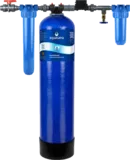 Aquasana HealthShield WH-HS Aquasana HealthShield WH-HS |
Maker claim | C | $2,099 | NSF/ANSI 53, NSF/ANSI 401, CSA B483.1 | Check price |
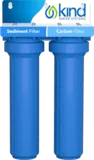 Kind Water Systems E-1000 Kind Water Systems E-1000 |
Maker claim | C | $976 | None | Check price |
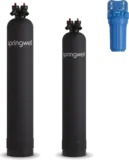 SpringWell CSF1 SpringWell CSF1 |
Maker claim | C | $2,321 | None | Check price |
 RKIN CS8 / CS9 / CS10 / CS13 RKIN CS8 / CS9 / CS10 / CS13 |
Maker claim | C | $938 | None | Check price |
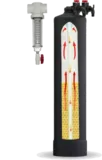 SoftPro Whole House Chlorine+ Filter (upflow catalytic carbon) SoftPro Whole House Chlorine+ Filter (upflow catalytic carbon) |
Maker claim | C | $917 | None | Check price |
 SpringWell PFS-1 SpringWell PFS-1 |
Maker claim | C | $2,910 | None | Check price |
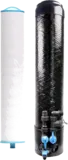 US Water Systems Pioneer (Enpress CTA0840BBBKP5-04C00) US Water Systems Pioneer (Enpress CTA0840BBBKP5-04C00) |
Maker claim | C | $1,669 | NSF/ANSI 53 (lead, cyst, PFOA/PFOS), NSF P473 (PFOA, PFOS), CSA B483.1 | Check price |
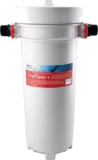 Watts OneFlow+ OFPSYS Watts OneFlow+ OFPSYS |
Maker claim | C | $829 | NSF/ANSI 372 (lead-free materials only) | Check price |
 US Water Systems Matrixx Catalytic Carbon (081-MXF-CX) US Water Systems Matrixx Catalytic Carbon (081-MXF-CX) |
Maker claim | C | $1,326 | None | Check price |
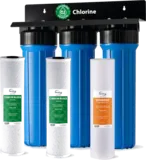 iSpring WGB32B iSpring WGB32B |
Maker claim | D | $517 | None | Check price |
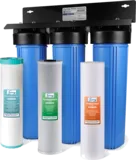 iSpring WGB32BM iSpring WGB32BM |
Maker claim | D | $536 | None | Check price |
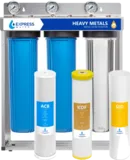 Express Water WH300SCKS Express Water WH300SCKS |
Maker claim | D | $548 | None | Check price |
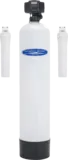 Crystal Quest SMART Whole House Water Filter (CQE-WH-01114) Crystal Quest SMART Whole House Water Filter (CQE-WH-01114) |
Maker claim | D | $1,791 | None | Check price |
Open these in the system finder
Common questions
Is chlorine in tap water safe to drink?
Yes, at the levels utilities use. The CDC says chlorine levels up to 4 mg/L are considered safe in drinking water, and EPA's enforceable cap is the same 4 mg/L.
Do I need a whole-house filter to remove chlorine?
Not for drinking water. A pitcher, faucet or under-sink carbon filter certified to NSF/ANSI 42 for chlorine handles taste and smell for a few dollars to about $100. A whole-house carbon system makes sense only if the smell in showers and baths bothers you.
Does letting water sit remove chlorine?
It helps. The CDC says letting water sit for days removes chlorine, but not chloramine. A carbon filter is faster and more reliable.
How do I know if my utility uses chlorine or chloramine?
Check the disinfectant section of your Consumer Confidence Report, or call the utility. A DPD kit that reads free and total chlorine also tells you: if most of the total is not free chlorine, the utility uses chloramine.
Does a shower filter remove chlorine?
Shower filters certified to NSF/ANSI 177 are tested for free chlorine reduction. NSF notes they have not been evaluated with chloramine, so the certification does not apply if your utility uses chloramine.
Sources
- EPA: National primary drinking water regulations (MRDL table)
- CDC: Water disinfection with chlorine and chloramine
- EPA: Stage 1 and Stage 2 disinfectants and disinfection byproducts rules
- EPA: Consumer Confidence Report information for consumers
- WHO: Guidelines for drinking-water quality, 4th edition incorporating the first and second addenda
- EPA: Can chloraminated or chlorinated water be used for dialysis or aquariums?
- NSF: NSF/ANSI 177 shower filter certification
- NSF: Certified drinking water treatment units listings (reduction claims)
- Minnesota Department of Health: Home water treatment (costs and options)