
Volatile organic compounds (VOCs)
Key facts
- Type of concern
- Health
- EPA limit
- 5 µg/L each for benzene, TCE and PCE; 2 µg/L for vinyl chloride (MCL) EPA sets a separate MCL for more than 20 individual VOCs. The health goal for benzene, TCE, PCE and vinyl chloride is zero. Total trihalomethanes, disinfection byproducts that are also volatile, are capped at 80 µg/L.
- Common in
- private wells and city water
- How to test
- A VOC screen at a state-certified lab, $141 at Wisconsin's state lab; test if your well is near a gas station, dry cleaner, landfill or industrial site, or if the water smells of fuel or solvent.
| Treatment | Effectiveness | Look for |
|---|---|---|
| Activated carbon | Works well | NSF/ANSI 53 |
| Reverse osmosis | Partial | NSF/ANSI 58 |
At a glance: Volatile organic compounds (VOCs) are industrial and fuel chemicals, such as benzene, TCE and PCE, that dissolve in water and evaporate easily. Several are linked to cancer and liver problems, and EPA limits benzene, TCE and PCE to 5 µg/L each. They are rare above health limits in private wells but serious where they occur, usually near a gas station, dry cleaner, landfill or industrial site. Because you breathe them in the shower, a well with VOCs usually calls for whole-house carbon, not just a kitchen filter.
City water is monitored for regulated VOCs, so most city customers can rely on the annual water quality report.
What it is and where it comes from
VOCs are a large group of chemicals that, in the words of Wisconsin’s health department, “easily evaporate into the air.” They are found in fuels, solvents, paints, glues and cleaning products.
EPA’s health table gives the typical drinking water sources for the best-known ones:
| Compound | Typical source (EPA) |
|---|---|
| Benzene | Factory discharge; leaching from gas storage tanks |
| Trichloroethylene (TCE) | Metal degreasing sites and other factories |
| Tetrachloroethylene (PCE) | Factories and dry cleaners |
| Vinyl chloride | Leaching from PVC pipes; plastic factories |
Wisconsin advises testing if your well is near a landfill, industrial site, gas station or dry cleaner. EPA’s list of tests to add for private wells includes VOCs for wells near industrial or commercial sites.
Chlorinated city water contains another group: trihalomethanes (TTHMs), disinfection byproducts that form when chlorine reacts with organic matter. EPA regulates them separately at 80 µg/L.
Health and household effects
Health effects depend on the compound, the level and how long you are exposed. EPA’s health table lists:
- Benzene: anemia, decrease in blood platelets, increased risk of cancer.
- TCE and PCE: liver problems, increased risk of cancer.
- Vinyl chloride: increased risk of cancer.
- TTHMs: liver, kidney or central nervous system problems, increased risk of cancer.
Drinking is not the only route. Wisconsin’s health department says VOCs such as TCE and benzene can escape from water used for showering, bathing, dishwashing and laundry, and that breathing the vapors can be a significant source of exposure. That is the main reason whole-house treatment matters for VOCs when it often does not for metals.
You usually cannot rely on taste, smell or staining to tell you VOCs are present. Testing is the only reliable check.
Limits and what they mean
| Compound | EPA MCL | EPA health goal |
|---|---|---|
| Benzene | 5 µg/L | Zero |
| TCE | 5 µg/L | Zero |
| PCE | 5 µg/L | Zero |
| Vinyl chloride | 2 µg/L | Zero |
| Total trihalomethanes | 80 µg/L | Not set |
EPA sets separate limits for more than 20 VOCs, so check any lab result compound by compound against the table. A health goal of zero means EPA considers no level free of risk; the MCL is the enforceable limit for public systems. Private wells are not covered by these rules.
How common are they? A USGS study of more than 2,000 domestic wells found organic compounds, including VOCs, “frequently detected at low concentrations” but “seldom” above health benchmarks: each of the few that exceeded one did so in fewer than 1% of wells.
How to test
Order a VOC screen from a state-certified lab. Wisconsin’s state lab charges $141 and lists about 21 business days for results. Ask your health department whether there is known contamination near you, which also tells you which compounds to look for.
VOCs evaporate easily, so use the lab’s own vials and follow its filling instructions exactly. Our well testing guide covers labs and what else to test.
On city water, read your Consumer Confidence Report before spending money on a test.
Treatment options
| Method | How well it works | Certification to look for | Cost range |
|---|---|---|---|
| Whole-house activated carbon | High, and covers shower and laundry exposure | NSF/ANSI 53 VOC reduction | $500 to $3,000 |
| Point-of-use carbon | High for drinking water | NSF/ANSI 53 VOC reduction | $10 to $100 |
| Reverse osmosis | Moderate on its own; carbon stages do most of the work | NSF/ANSI 58 individual VOC claims | $300 to $1,500 |
| Aeration (air stripping) | High for many VOCs, TCE and vinyl chloride (MDH) | None common | $800 to $4,000 |
Cost ranges are Minnesota Department of Health estimates based on 2017 and 2018 quotes, low end self-installed and high end professionally installed.
Wisconsin’s health department lists carbon filtration certified to NSF/ANSI 53 as the device type for VOCs. Carbon has a finite capacity, so replace it on schedule and test the treated water after installation and periodically after that. Our whole-house filter picks and well water picks compare carbon systems, and the filter finder shows which products hold VOC claims. For how whole-house and point-of-use approaches compare, see whole-house filter vs reverse osmosis.
When to call a professional
If a well test shows any VOC above its EPA limit, call your state health or environmental agency before choosing treatment. A VOC detection often means a contamination source nearby, and the agency can tell you whether it is tracking one.
Use a water treatment professional to size whole-house carbon for your flow and the specific compound, and to set a media replacement schedule. Keep testing the treated water: carbon that is exhausted can let VOCs through without any change you would notice.
Systems in our database that address volatile organic compounds (vocs)
| System | Evidence | Grade | Price | Certified to | |
|---|---|---|---|---|---|
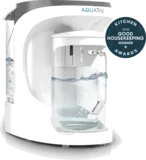 AquaTru Carafe (AT100 series) AquaTru Carafe (AT100 series) |
Certified | B | $375 | NSF/ANSI 42, NSF/ANSI 53, NSF/ANSI 58, NSF/ANSI 401, NSF/ANSI 372 | Check price |
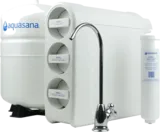 Aquasana SmartFlow Reverse Osmosis (AQ-SFRO2) Aquasana SmartFlow Reverse Osmosis (AQ-SFRO2) |
Certified | B | $190 | NSF/ANSI 42, NSF/ANSI 53, NSF/ANSI 58, NSF/ANSI 401, CSA B483.1, NSF/ANSI 372 | Check price |
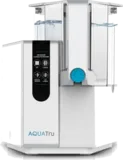 AquaTru Classic (AT2000 series) AquaTru Classic (AT2000 series) |
Certified | B | $475 | NSF/ANSI 42, NSF/ANSI 53, NSF/ANSI 58, NSF/ANSI 401, NSF/ANSI 372 | Check price |
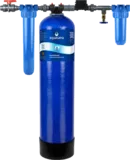 Aquasana HealthShield WH-HS Aquasana HealthShield WH-HS |
Certified | C | $2,099 | NSF/ANSI 53, NSF/ANSI 401, CSA B483.1 | Check price |
 AquaTru Freestanding Model 1 (ATFS-1-W) AquaTru Freestanding Model 1 (ATFS-1-W) |
Certified | C | $1,699 | NSF/ANSI 42, NSF/ANSI 53, NSF/ANSI 58, NSF/ANSI 401 | Check price |
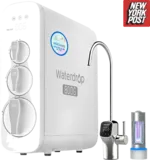 Waterdrop G3P800 (WD-G3P800-W) Waterdrop G3P800 (WD-G3P800-W) |
Lab tested | B | $999 | NSF/ANSI 58, NSF/ANSI 53, NSF/ANSI 42, NSF/ANSI 372 | Check price |
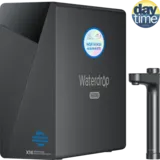 Waterdrop X16 (WD-X16) Waterdrop X16 (WD-X16) |
Lab tested | C | $1,999 | NSF/ANSI 58, NSF/ANSI 42, NSF/ANSI 372 | Check price |
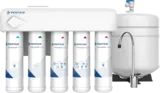 Pentair FreshPoint GRO-575B (161112) Pentair FreshPoint GRO-575B (161112) |
Maker claim | B | $722 | NSF/ANSI 58, NSF/ANSI 53, NSF/ANSI 42, NSF/ANSI 401, CSA B483.1, NSF/ANSI 53, NSF/ANSI 372 | Check price |
| Home Master HMF3SdgFeC | Maker claim | B | $550 | None | Check price |
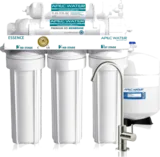 APEC ROES-50 APEC ROES-50 |
Maker claim | B | $231 | NSF/ANSI 58, NSF/ANSI 372 | Check price |
| Home Master TMAFC | Maker claim | B | $330 | None | Check price |
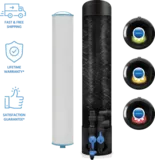 SpringWell LCR-1 SpringWell LCR-1 |
Maker claim | B | $1,554 | NSF/ANSI 53 | Check price |
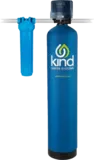 Kind Water Systems S-500 Kind Water Systems S-500 |
Maker claim | C | $1,471 | None | Check price |
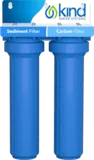 Kind Water Systems E-1000 Kind Water Systems E-1000 |
Maker claim | C | $976 | None | Check price |
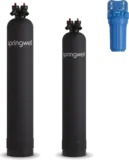 SpringWell CSF1 SpringWell CSF1 |
Maker claim | C | $2,321 | None | Check price |
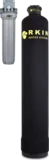 RKIN CS8 / CS9 / CS10 / CS13 RKIN CS8 / CS9 / CS10 / CS13 |
Maker claim | C | $938 | None | Check price |
 US Water Systems Matrixx Catalytic Carbon (081-MXF-CX) US Water Systems Matrixx Catalytic Carbon (081-MXF-CX) |
Maker claim | C | $1,326 | None | Check price |
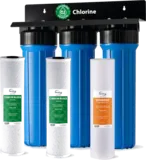 iSpring WGB32B iSpring WGB32B |
Maker claim | D | $517 | None | Check price |
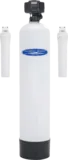 Crystal Quest Metal Removal Whole House Water Filter (CQE-WH-01195) Crystal Quest Metal Removal Whole House Water Filter (CQE-WH-01195) |
Maker claim | D | $1,331 | None | Check price |
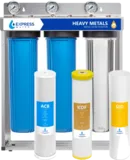 Express Water WH300SCKS Express Water WH300SCKS |
Maker claim | D | $548 | None | Check price |
 Crystal Quest SMART Whole House Water Filter (CQE-WH-01114) Crystal Quest SMART Whole House Water Filter (CQE-WH-01114) |
Maker claim | D | $1,791 | None | Check price |
Open these in the system finder
Common questions
Can you get exposed to VOCs from showering?
Yes. Wisconsin's health department says VOCs such as TCE and benzene can escape from water used for showering, bathing and running the dishwasher and washing machine, and breathing the vapor can be a significant exposure. That is why whole-house carbon is often recommended when a well has VOCs.
How do VOCs get into well water?
EPA lists sources such as leaking gasoline storage tanks (benzene), metal degreasing sites (TCE), factories and dry cleaners (PCE), and plastic factories and PVC pipe (vinyl chloride). Wisconsin's health department advises testing wells near gas stations, dry cleaners, landfills and industrial sites.
Are VOCs common in private wells?
Low-level detections are common, but levels above health limits are rare. A USGS study of more than 2,000 domestic wells found organic compounds frequently detected at low concentrations, with each one that exceeded a benchmark doing so in fewer than 1% of wells.
Do I need to test city water for VOCs?
Usually not. Public water systems must monitor for regulated VOCs and report violations, so check your utility's annual water quality report first.
Sources
- EPA: National primary drinking water regulations (organic chemicals table)
- EPA: Stage 1 and Stage 2 disinfectants and disinfection byproducts rules
- Wisconsin Department of Health Services: Volatile organic compounds
- Wisconsin Department of Health Services: Treatment devices for private well contaminants
- USGS: Quality of water from domestic wells in principal aquifers, 1991-2004
- Minnesota Department of Health: Home water treatment (costs and options)
- Wisconsin State Laboratory of Hygiene: Test prices (effective July 1, 2026)
- NSF: Certified drinking water treatment units listings (VOC claims under NSF/ANSI 53 and 58)
- EPA: Protect your home's water (private wells)
- EPA: Consumer Confidence Report information for consumers