
Hydrogen sulfide
Key facts
- Type of concern
- Household (aesthetic)
- EPA limit
- No federal limit EPA's secondary odor standard (3 threshold odor number) covers rotten-egg, musty or chemical smells in general. Penn State says hydrogen sulfide makes water undrinkable long before it reaches harmful concentrations.
- Signs
- rotten egg smell, sometimes only from the hot tap; black or yellow stains on fixtures; tarnished silverware and corroded plumbing
- Common in
- private wells
- How to test
- A field test or a specially preserved lab sample, because the gas escapes from an open bottle; not every certified lab offers it, so ask before ordering and test iron, manganese and pH at the same time.
| Treatment | Effectiveness | Look for |
|---|---|---|
| Activated carbon | Partial | - |
| Catalytic carbon | Partial | - |
| Air injection oxidation | Works well | - |
| Specialty media | Works well | - |
| Chemical injection | Works well | - |
At a glance: A rotten egg smell in water is hydrogen sulfide, a gas usually produced by sulfur-reducing bacteria in low-oxygen groundwater, wells or water heaters. It has no federal limit because the smell makes water unpleasant long before it becomes harmful, but it corrodes plumbing and blackens silver. Find the source first: if only the hot water smells, the water heater is the likely cause, and an anode rod swap is far cheaper than a filter.
If both hot and cold taps smell, the gas is in the well water, and treatment depends on how much there is.
What it is and where it comes from
Hydrogen sulfide is a dissolved gas. The Minnesota Department of Health lists its sources as natural decay, sulfur bacteria living in groundwater, wells and plumbing, reactions inside water heaters, and rarely pollution. Penn State adds that it is common where sulfur-reducing bacteria thrive in low-oxygen water, such as wells drilled into shale and sandstone.
The water heater is a frequent culprit. MDH explains that magnesium anode rods, which protect the tank from corrosion, can supply electrons that help convert sulfate in the water into hydrogen sulfide. That is why some homes only notice the smell from the hot tap.
MDH suggests a simple check: after you have been away for a few hours, smell the hot and cold water separately. Our sulfur smell guide walks through what each result means.
Health and household effects
At the levels found in well water, hydrogen sulfide is mainly a nuisance. Penn State says most people can smell it at levels well below 0.5 mg/L, and that it has no drinking water standard because it renders water “aesthetically undrinkable long before it reaches harmful concentrations.” MDH notes the gas can be harmful at high levels, so it should be vented rather than allowed to collect in enclosed spaces such as well pits.
The household effects are the real cost:
- Corrosion. Penn State says it corrodes metal plumbing, and MDH lists pipe corrosion as a sign.
- Stains. Penn State describes yellow or black greasy stains on fixtures and inside pipes. MDH notes black stains on silverware and plumbing fixtures.
- Taste. Coffee, tea and cooking water pick up the flavor.
The sulfur bacteria that produce it are not harmful themselves, according to MDH.
Limits and what they mean
| Standard | Level | What it means |
|---|---|---|
| EPA | No limit for hydrogen sulfide | No federal health or secondary standard |
| EPA secondary standard for odor | 3 threshold odor number | Guideline for any objectionable smell |
| EPA secondary standard for sulfate | 250 mg/L | Salty taste; a different compound |
| WHO | No health-based value | Taste and odor noticeable at 0.05 to 0.1 mg/L |
Sulfate and hydrogen sulfide are often confused because both get called “sulfur.” Sulfate has no smell. The two are linked in one place, the water heater, where sulfate can become hydrogen sulfide.
How to test
Hydrogen sulfide escapes from an open bottle, so a normal sample can read low. Penn State says it has to be measured on site or collected with chemical preservation for the lab, and not every state-accredited lab offers the test. Ask your lab how to sample before you collect anything.
Test iron, manganese and pH in the same round. Oxidizing filters are rated for all four, and iron often comes with sulfur in the same well. MDH also recommends testing wells for coliform bacteria every year regardless of smell. Our well testing guide covers labs and costs.
Treatment options
Treatment is chosen by level. The ranges below come from Penn State and MDH.
| Method | How well it works | Certification to look for | Cost range |
|---|---|---|---|
| Activated carbon | Moderate; below about 1 mg/L | None common | $500 to $3,000 whole house |
| Aeration | Moderate; below about 2 mg/L (Penn State) | None common | $800 to $4,000 |
| Oxidizing media such as greensand (specialty media) | High; about 2 to 6 mg/L depending on source | None common | $1,500 to $3,000 |
| Air injection oxidation with filtration | High within the maker’s rating | None common | $2,231 for the system we track |
| Chemical injection plus filter, often catalytic carbon | High, including above 6 mg/L | None common | $500 to $2,500; $2,255 to $2,983 for peroxide systems we track |
Cost ranges are Minnesota Department of Health estimates based on 2017 and 2018 quotes, low end self-installed and high end professionally installed. Figures for systems we track are prices checked September 2026.
Shock chlorination of the well can kill the sulfur bacteria and is a sensible first step, but Penn State cautions that the relief is often temporary without continuous treatment. If the smell returns, treat by level. Our well water filter picks list each system’s hydrogen sulfide limit, and the filter finder sorts by problem.
When to call a professional
If only the hot water smells, call a plumber about the water heater anode. MDH recommends having the anode replaced professionally, and Penn State warns that removing it without a replacement voids the manufacturer’s warranty.
Call a water treatment professional if hot and cold both smell and your level is above about 1 mg/L, or if you also have iron or low pH, because the equipment must be matched to all of them. Call a well contractor if the smell appeared suddenly after well work, or comes with slime and other signs of bacteria.
Systems in our database that address hydrogen sulfide
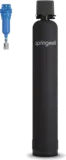
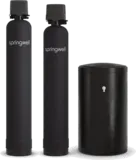
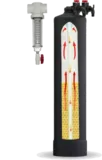
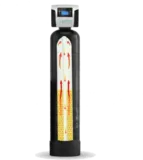
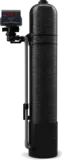
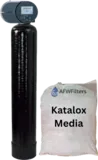
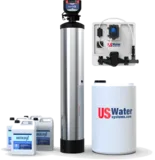
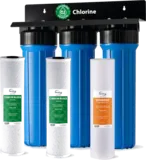
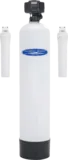
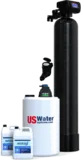
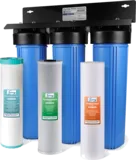
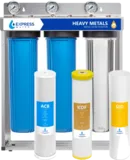
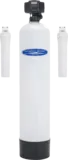
Open these in the system finder
Common questions
Is hydrogen sulfide in well water dangerous to drink?
At levels found in well water it is mainly a smell and corrosion problem. Penn State says people can smell it at levels well below 0.5 mg/L, and that it makes water undrinkable long before it reaches harmful concentrations. MDH notes the gas can be harmful at high levels, so vent it and avoid letting it build up in enclosed spaces.
Why does only my hot water smell like rotten eggs?
That usually points to the water heater. MDH explains that a magnesium anode rod can supply electrons that help convert sulfate to hydrogen sulfide inside the tank. Penn State says replacing it with an aluminum anode eliminates the hot-water odor, for far less than a filter.
Is hydrogen sulfide the same as sulfate?
No. Hydrogen sulfide is a gas that smells of rotten eggs. Sulfate is a dissolved mineral with no smell that gives water a salty or bitter taste above EPA's 250 mg/L secondary standard. They need different treatment.
Will a carbon filter remove the rotten egg smell?
Only at low levels, below about 1 mg/L according to Penn State and MDH. Above that, carbon exhausts quickly and you need oxidation and filtration.
Sources
- Minnesota Department of Health: Hydrogen sulfide in well water
- Penn State Extension: Hydrogen sulfide (rotten egg odor) in water wells
- EPA: Secondary drinking water standards
- WHO: Hydrogen sulfide in drinking-water (background document)
- Minnesota Department of Health: Home water treatment (costs and options)
- Minnesota Department of Health: Sulfate in well water