
Sediment filters
Key facts
- Installs at
- Whole house or single tap
- Removes
- Sediment
- Does not remove
- Chlorine, PFAS, Bacteria, Nitrate, Hardness
- Certifications
- NSF/ANSI 42, NSF/ANSI/CAN 61 what these mean
- Needs
- no drain or power
- Typical cost
- $15 to $65 per replacement cartridge; usually sold as the first stage of a larger system
- Upkeep
- cartridge every 2 to 12 months, depending on the system and how much sediment the water carries
A sediment filter is a physical strainer. It traps sand, silt, rust flakes and other particles, and it does nothing to dissolved chemicals such as chlorine, PFAS, nitrate or hardness minerals.
It is rarely the whole answer, but nearly every whole-house system uses one as its first stage to protect the carbon, UV lamp or membrane behind it. If your only complaint is grit in faucet aerators or cloudy water after heavy rain, a sediment filter on its own may be all you need.
How it works
Water passes through a pleated, spun or wound cartridge, or through a mesh screen. Particles larger than the openings stay behind, and the cartridge slowly loads up until it needs replacing.
The micron rating describes the size of particle the filter is meant to stop. Whole-house pre-filters are commonly 5 micron: iSpring’s WGB32B starts with a 5-micron polypropylene cartridge, and SpringWell’s CF1 uses a 5-micron sediment filter. A lower number catches finer particles but clogs faster.
Most micron ratings on cartridges are the maker’s own. The independent check is a particulate reduction claim under NSF/ANSI 42. Class I, the finest, requires the filter to reduce particles 0.5 to 1 micron in size by 85 percent, according to Water Conditioning & Purification.
Sandy wells often use a coarse screen or spin-down stage ahead of the fine cartridge, so the cartridge does not fill up in weeks.
What it removes and what it does not
A sediment filter removes sediment: sand, silt, scale flakes and rust particles. It can catch some iron that has already oxidized into particles, but dissolved (clear-water) iron passes straight through. Our iron in well water guide covers what works on dissolved iron.
It does not remove:
- Dissolved chemicals. Chlorine, PFAS, nitrate, arsenic and hardness are dissolved, so they pass any sediment cartridge.
- Germs. The CDC says even microfiltration at 0.1 micron only partly removes bacteria and does not remove viruses. A 5-micron cartridge is 50 times coarser. See bacteria.
- Lead, reliably. EPA’s tool for lead filters looks for lead reduction under NSF/ANSI 53 plus Class I particulate reduction under NSF/ANSI 42. A plain sediment cartridge is not a lead filter.
Certifications to look for
- NSF/ANSI 42 with a stated particulate reduction class, if you want the micron claim independently verified.
- NSF/ANSI 53 if the product makes a health claim such as cyst or lead reduction.
- NSF/ANSI/CAN 61 for materials in whole-house equipment. NSF says this standard covers what leaches from materials, and sets no performance requirements, so it says nothing about what the filter catches.
Most whole-house sediment cartridges sold online carry none of these. “Tested to NSF standards” is not a certification; check the model in the NSF, IAPMO or WQA listings.
Installation and upkeep
Cartridge housings go on the main line after the meter, or after the pressure tank on a well, usually with a bypass valve. They need no drain and no power, and many owners install them as a DIY job.
Replacement schedules vary by system. Aquasana lists every 2 months for its 20-inch pre-filter, SpringWell lists 6 to 9 months, and iSpring lists 6 to 12 months. Dirty water shortens all of these. Falling water pressure is the usual sign a cartridge is full.
Put sediment filtration first. Penn State Extension says water entering a UV unit must be completely clear and free of suspended sediment, and Nebraska Extension says sediment or carbon pre-filters extend the life of a reverse osmosis membrane.
Costs
HomeGuide puts replacement carbon, sediment or iron cartridges at $15 to $65 each. Prices checked September 2026 on each maker’s store:
| Cartridge | Price | Schedule |
|---|---|---|
| iSpring FP25B (5 micron) | $37.99 | Every 6 to 12 months |
| SpringWell 10-inch sediment 2-pack | $42.19 | Every 6 to 9 months |
| Aquasana 20-inch pre-filter 3-pack | $36.99 | One every 2 months, about $74 a year |
Sediment filtration is rarely bought alone. iSpring’s WGB32B pairs a sediment stage with two carbon stages for $517. Our cost guide shows full 10-year totals, and the product finder filters systems by treatment type.
Pros and limits
Pros
- Cheap to buy and to run.
- No drain, no power, no chemicals.
- Protects UV lamps, membranes, carbon and fixtures from grit.
Limits
- Removes nothing dissolved: no chlorine, PFAS, nitrate, hardness or dissolved iron.
- Does not disinfect.
- Clogs and cuts water pressure if cartridges are not changed on time.
- Micron ratings are usually unverified maker claims.
Systems in our database that use sediment filters
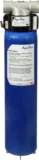
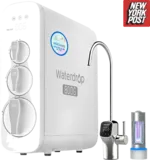
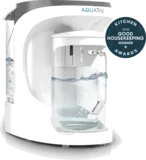
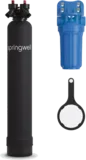
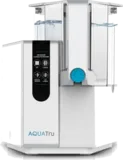
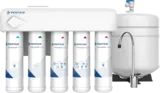
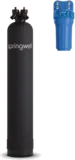
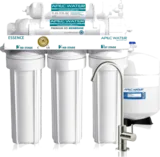
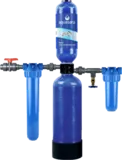
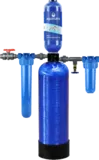
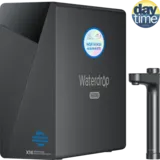
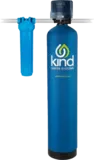
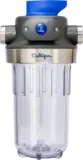
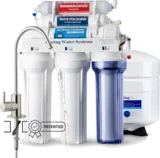
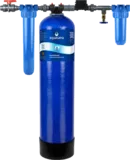
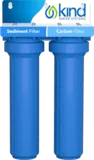
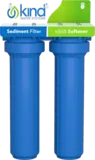
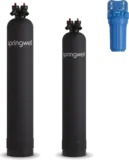
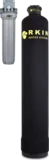
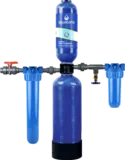
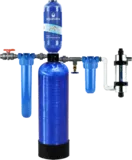
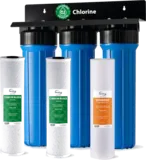
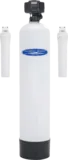
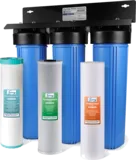
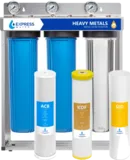
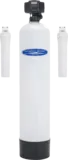
Open these in the system finder
Common questions
What micron sediment filter do I need?
Most whole-house systems use 5 micron: SpringWell and iSpring both specify 5-micron pre-filters. A finer rating catches smaller particles but clogs sooner, so very sandy well water usually needs a coarser stage first.
Does a sediment filter remove bacteria?
No. The CDC says even microfiltration at 0.1 micron only partly removes bacteria and does not remove viruses. A typical 5-micron cartridge is far coarser. Use UV or chlorination for bacteria.
How often should I change a sediment filter?
Follow the maker's schedule, which ranges from every 2 months (Aquasana's 20-inch pre-filter) to every 6 to 12 months (iSpring). Change it sooner if water pressure drops, since that usually means the cartridge is clogged.
Will a sediment filter remove iron?
Only iron that has already oxidized into rust particles. Dissolved (clear-water) iron passes through. For dissolved iron you need a softener, an oxidizing filter or chemical injection, depending on the level.
Sources
- WC&P: Cyst, turbidity and nominal particulate reduction Class I (Rick Andrew, 2005)
- NSF: NSF/ANSI 42, 53 and 401 filtration systems standards
- NSF: NSF/ANSI 61 drinking water system components, health effects
- EPA: Consumer tool for identifying filters certified to reduce lead
- CDC: About home water treatment systems
- Penn State Extension: Coliform bacteria (UV pre-treatment)
- University of Nebraska-Lincoln Extension: Drinking water treatment, reverse osmosis (G1490)
- EPA: Reducing PFAS in drinking water with treatment technologies
- HomeGuide: Home water filtration system cost (2026)
- iSpring WGB32B product page
- SpringWell CF1 product page
- Aquasana Rhino product page