
Bacteria
Key facts
- Type of concern
- Health
- EPA limit
- Zero for total coliform and E. coli (MCLG) For public water systems, an E. coli detection can be an acute violation that requires rapid public notice, and repeated total coliform detections trigger an assessment. Private wells are not covered by these rules.
- Common in
- private wells
- How to test
- A total coliform and E. coli test at a state-certified lab using the lab's sterile bottle, $35 at Wisconsin's state lab and generally $10 to $30 according to Penn State Extension; test every year.
| Treatment | Effectiveness | Look for |
|---|---|---|
| Ultraviolet (UV) | Works well | NSF/ANSI 55 Class A |
| Chemical injection | Works well | - |
| Reverse osmosis | Partial | NSF/ANSI 58 |
| Sediment filtration | Limited | - |
At a glance: Bacteria are one of the most frequent health problems in private wells, and you cannot see, smell or taste them. Test every year for total coliform and E. coli at a state-certified lab. A coliform hit means surface water can reach your well; an E. coli hit means fecal contamination, so stop drinking the water untreated. The first fix is the well itself: disinfect it, repair the entry point and retest. Continuous treatment such as UV comes after that, if bacteria keep returning.
Public water systems disinfect and test for bacteria. This page is mainly for well owners.
What it is and where it comes from
Coliform bacteria live on the ground surface and in the gut of people and animals. MDH explains why labs test for them: they are everywhere at the surface but do not usually occur more than a few feet into the soil, so finding them in well water means surface contamination has found a way in. E. coli is a fecal coliform, so its presence points to human or animal waste.
Common entry points, according to MDH, include corroded casings, poor construction, and wells close to septic systems or feedlots. Flooding, well repairs and damaged well caps are frequent triggers.
It is widespread. A USGS study of more than 2,000 domestic wells found total coliform in about 34% and E. coli in about 8%. A 2006 survey of 450 Pennsylvania private wells cited by Penn State found coliform in about 35% and E. coli in about 15%.
Health and household effects
Total coliform bacteria are “not a health threat in itself,” in EPA’s words, but they indicate harmful organisms may be present. MDH lists the illnesses that disease-causing microorganisms in water can cause, including diarrheal illness, dysentery, salmonellosis, hepatitis and giardiasis, with symptoms such as diarrhea, vomiting, cramps, nausea, headaches, fever and fatigue.
The CDC recommends testing again when someone in the home becomes pregnant or a baby joins the household.
There are usually no household signs. Water with dangerous bacteria can look, smell and taste normal.
Limits and what they mean
| Standard | Level | What it means |
|---|---|---|
| EPA health goal (MCLG), total coliform | Zero | Any detection is a warning sign |
| EPA health goal (MCLG), E. coli | Zero | E. coli detection can be an acute violation for public systems |
| WHO guideline, E. coli | None detectable in any 100 mL sample | International benchmark |
For public systems, the Revised Total Coliform Rule uses total coliform detections to trigger an assessment of the system and requires sanitary defects to be fixed. EPA says an E. coli detection can signify an acute violation requiring rapid public notice. For a private well, apply the same standard: any E. coli is unacceptable, and any coliform needs follow-up.
How to test
Use a state-certified lab and its sterile bottle. Do not rinse the bottle or touch the inside of the cap. Coliform samples have to reach the lab quickly (federal rules for public systems allow 30 hours), so collect early in the week and follow the lab’s instructions.
Penn State says the test is inexpensive, generally $10 to $30, and Wisconsin’s state lab charges $35. MDH, the CDC and EPA all recommend testing every year, and again after flooding, well work or any change in taste, color or smell. Our well testing guide covers the full annual panel.
Treatment options
Fix the source first. Continuous treatment on a well with a broken cap treats the symptom and leaves the contamination path open.
| Method | How well it works | Certification to look for | Cost range |
|---|---|---|---|
| Shock chlorination of the well | Temporary to permanent, depending on the source | None | Bleach and your time if you do it yourself |
| UV disinfection, whole house | High for bacteria and viruses in clear water | NSF/ANSI 55 Class A | $250 to $800; $995 to $1,101 for systems we track |
| Continuous chlorination plus filter | High | None common | $500 to $2,500 |
| Reverse osmosis, point of use | Moderate; cyst claim, not disinfection | NSF/ANSI 58 cyst reduction | $300 to $1,500 |
| Distillation, point of use | High | NSF/ANSI 62 | $300 to $1,200 |
Cost ranges are Minnesota Department of Health estimates based on 2017 and 2018 quotes, low end self-installed and high end professionally installed. Figures for systems we track are prices checked September 2026.
Shock chlorination. Penn State found it could solve the problem in about 15% of wells with coliform when bacteria counts were low. For iron bacteria, MDH advises a concentration close to, but not above, 200 ppm.
UV. NSF/ANSI 55 has two classes. Class A systems are built to disinfect water contaminated with bacteria and viruses; Class B systems are only for supplemental treatment of water already considered safe. UV needs clear water, so a sediment filter usually goes in front, and Penn State notes hard water can coat the lamp sleeve with scale. Penn State advises against UV where total coliform exceeds 1,000 colonies per 100 mL or fecal coliform exceeds 100.
Chlorination also keeps a disinfectant in the plumbing and helps with iron and sulfur, at the cost of more upkeep and a chlorine taste that may need a carbon filter. See our well water filter picks and the filter finder for UV and combined systems.
When to call a professional
Call your county or state health department after any positive E. coli result. They can advise on disinfection and a safe interim water source.
Call a licensed well contractor if coliform keeps returning after disinfection, if the cap, casing or seal is damaged, or if floodwater reached the wellhead. A contractor can find the entry point, which no treatment unit will fix. Once the well is sound, a water treatment professional can size UV or chlorination to your flow and water chemistry.
Systems in our database that address bacteria
| System | Evidence | Grade | Price | Certified to | |
|---|---|---|---|---|---|
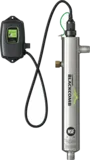 LUMINOR BLACKCOMB 5.1 LB5-101B LUMINOR BLACKCOMB 5.1 LB5-101B |
Certified | A | $897 | NSF/ANSI 55 Class B (listed as LB5-10XB, X = plug type, 13 gpm), CSA B483.1 | Check price |
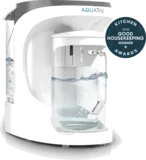 AquaTru Carafe (AT100 series) AquaTru Carafe (AT100 series) |
Certified | B | $375 | NSF/ANSI 42, NSF/ANSI 53, NSF/ANSI 58, NSF/ANSI 401, NSF/ANSI 372 | Check price |
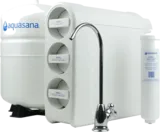 Aquasana SmartFlow Reverse Osmosis (AQ-SFRO2) Aquasana SmartFlow Reverse Osmosis (AQ-SFRO2) |
Certified | B | $190 | NSF/ANSI 42, NSF/ANSI 53, NSF/ANSI 58, NSF/ANSI 401, CSA B483.1, NSF/ANSI 372 | Check price |
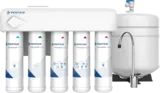 Pentair FreshPoint GRO-575B (161112) Pentair FreshPoint GRO-575B (161112) |
Certified | B | $722 | NSF/ANSI 58, NSF/ANSI 53, NSF/ANSI 42, NSF/ANSI 401, CSA B483.1, NSF/ANSI 53, NSF/ANSI 372 | Check price |
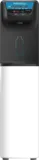 AquaTru Freestanding Model 1 (ATFS-1-W) AquaTru Freestanding Model 1 (ATFS-1-W) |
Certified | C | $1,699 | NSF/ANSI 42, NSF/ANSI 53, NSF/ANSI 58, NSF/ANSI 401 | Check price |
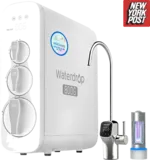 Waterdrop G3P800 (WD-G3P800-W) Waterdrop G3P800 (WD-G3P800-W) |
Lab tested | B | $999 | NSF/ANSI 58, NSF/ANSI 53, NSF/ANSI 42, NSF/ANSI 372 | Check price |
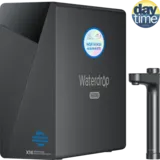 Waterdrop X16 (WD-X16) Waterdrop X16 (WD-X16) |
Lab tested | C | $1,999 | NSF/ANSI 58, NSF/ANSI 42, NSF/ANSI 372 | Check price |
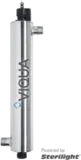 VIQUA VH410 VIQUA VH410 |
Maker claim | B | $880 | NSF/ANSI 55 Class B, listed model VH410-V only (with flow restrictor, 14 gpm); the plain VH410 priced here is not the listed model, CSA B483.1, listed model VH410-V only | Check price |
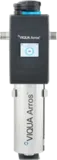 VIQUA Arros 15 VIQUA Arros 15 |
Maker claim | B | $1,046 | NSF/ANSI 55 Class B, listed model Arros 15-V only (with flow restrictor, 9.4 gpm at 16 mJ/cm2 and 70% UVT); the plain Arros 15 priced here is not the listed model, CSA B483.1, listed model Arros 15-V only | Check price |
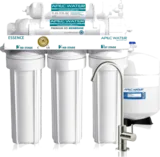 APEC ROES-50 APEC ROES-50 |
Maker claim | B | $231 | NSF/ANSI 58, NSF/ANSI 372 | Check price |
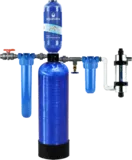 Aquasana Rhino Well Water with UV WH-WELL-UVS (WH-WELL-UV) Aquasana Rhino Well Water with UV WH-WELL-UVS (WH-WELL-UV) |
Maker claim | C | $1,749 | None | Check price |
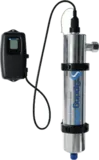 SpringWell SPRW-UV-15gpm SpringWell SPRW-UV-15gpm |
Maker claim | C | $1,101 | None | Check price |
 US Water Systems Pulsar UV (405-PUV-200) US Water Systems Pulsar UV (405-PUV-200) |
Maker claim | C | $995 | None | Check price |
 US Water Systems Matrixx InFusion (081-MIF) US Water Systems Matrixx InFusion (081-MIF) |
Maker claim | C | $2,983 | None | Check price |
Open these in the system finder
Common questions
What does a positive coliform test mean?
Total coliform bacteria are not usually harmful themselves, but EPA and MDH treat them as an indicator that surface contamination can reach your water. A positive E. coli result means human or animal waste contamination, and you should not drink the water untreated.
What should I do if my well tests positive for bacteria?
MDH's steps: use boiled or bottled water for drinking and cooking, disinfect the well with a chlorine solution, and retest to confirm the bacteria are gone. Then find and fix the entry point, such as a damaged cap or casing.
Is a UV system enough to make well water safe?
UV certified to NSF/ANSI 55 Class A is designed to disinfect water contaminated with bacteria and viruses, but it needs clear water and does not fix a damaged well. Penn State advises against relying on UV where total coliform exceeds 1,000 colonies per 100 mL.
How often should I test my well for bacteria?
Every year, according to the CDC, EPA and MDH, and again after flooding, well repairs, or any change in taste, color or smell.
Does shock chlorination fix bacteria for good?
Sometimes. It kills bacteria in the well and plumbing, but if the contamination path remains, bacteria return. Penn State found shock chlorination could solve the problem in about 15% of wells with coliform bacteria when counts were low.
Sources
- EPA: Revised Total Coliform Rule and Total Coliform Rule
- EPA: National primary drinking water regulations (microorganisms table)
- Minnesota Department of Health: Bacterial safety of well water
- Penn State Extension: Coliform bacteria
- Penn State Extension: Shock chlorination of wells and springs
- CDC: Guidelines for testing well water
- USGS: Quality of water from domestic wells in principal aquifers, 1991-2004
- WHO: Guidelines for drinking-water quality, 4th edition incorporating the first and second addenda
- Minnesota Department of Health: Home water treatment (costs and options)
- Wisconsin State Laboratory of Hygiene: Test prices (effective July 1, 2026)
- NSF: Certified drinking water treatment units listings (NSF/ANSI 55 and 58 claims)
- eCFR: 40 CFR 141.21, coliform sampling
- EPA: Protect your home's water (private wells)