
Manganese
Key facts
- Type of concern
- Health and household
- EPA limit
- 0.05 mg/L (SMCL) Non-enforceable secondary standard for black staining and bitter metallic taste. EPA's lifetime health advisory is 0.3 mg/L, and EPA says infants under 6 months should not drink water above 0.3 mg/L even for 10 days.
- Signs
- black or brown stains on fixtures and laundry; bitter metallic taste; dark specks or black water
- Common in
- private wells
- How to test
- A certified lab manganese test, $38 at Wisconsin's state lab, or Penn State's $85 package that also covers iron, hardness, pH and copper.
| Treatment | Effectiveness | Look for |
|---|---|---|
| Specialty media | Works well | - |
| Ion exchange softening | Partial | NSF/ANSI 44 |
| Reverse osmosis | Works well | - |
| Air injection oxidation | Partial | - |
| Chemical injection | Partial | - |
At a glance: Manganese is a natural metal in groundwater that causes black stains above 0.05 mg/L, EPA’s secondary standard. Unlike iron, it is also a health concern at higher levels, especially for infants: EPA advises that babies under 6 months not drink water above 0.3 mg/L. If you have an infant and a well, test for manganese, and use a treated or alternative source for formula if the level is high.
The fix for staining is usually an oxidizing filter or a softener. For drinking water alone, reverse osmosis at the kitchen tap is the simpler answer.
What it is and where it comes from
Manganese occurs naturally in rocks and soil and dissolves into groundwater, according to the Minnesota Department of Health. It often shows up alongside iron, and Penn State Extension notes both are more common in some regions than others.
It is common enough to matter. A USGS study of more than 2,000 domestic wells in major aquifers found manganese above a human-health benchmark in roughly 5 to 7 percent of wells, alongside nitrate and arsenic. Public water systems can have it too, but federal rules only set a non-enforceable secondary standard, so utilities are not required to remove it.
Health and household effects
MDH summarizes the health risks:
- Infants “may develop learning and behavior problems if they drink water with too much manganese.”
- Children and adults who drink water with high levels for a long time “may have problems with memory, attention, and motor skills.”
EPA’s health advisory explains why infants are singled out: their ability to clear manganese through bile is not fully developed, so they may retain more of it.
The household effects appear at much lower levels. EPA’s secondary standard of 0.05 mg/L is set for black to brown color, black staining and a bitter metallic taste. Penn State notes manganese “often results in a dense black stain,” which is harder to remove than iron’s orange. MDH adds that manganese can cause scaling in plumbing and affect the water’s look, smell and taste.
Limits and what they mean
| Standard | Level | What it means |
|---|---|---|
| EPA secondary standard | 0.05 mg/L | Staining and taste guideline; not enforced |
| EPA lifetime health advisory | 0.3 mg/L | Health-based advice, not an enforceable limit |
| EPA advice for infants under 6 months | 0.3 mg/L, even for 10 days | Short exposures count for infants |
| WHO provisional guideline (2021) | 0.08 mg/L | Protects bottle-fed infants |
| Minnesota guidance, infant drinks tap water | 0.1 mg/L | State health guidance |
| Minnesota guidance, no infant | 0.3 mg/L | State health guidance |
None of these is an enforceable federal limit, and private wells are not covered by federal rules. Treat the infant values as the ones to act on if a baby lives in the home.
How to test
A certified lab test costs $38 at Wisconsin’s state lab. Penn State’s $85 package covers manganese with iron, hardness, pH and copper, which you will need anyway if you are choosing treatment. Our well testing guide explains labs, sampling and how to read the results.
Test raw water from a tap before any softener or filter to size treatment, and test the treated tap afterward to confirm it works. If a baby is coming, test before you start mixing formula with well water.
Treatment options
| Method | How well it works | Certification to look for | Cost range |
|---|---|---|---|
| Oxidizing media such as greensand (specialty media) | High, about 3 to 10 mg/L combined iron and manganese | None common | $1,500 to $3,000 |
| Water softener | Moderate to high at modest levels | NSF/ANSI 44 (Wisconsin DHS lists softeners for manganese; confirm what the listing covers) | $200 to $3,000 |
| Reverse osmosis, point of use | High for drinking water | No manganese claim exists; check maker data | $300 to $1,500 |
| Air injection oxidation with filtration | Moderate; check the manganese rating | None common | $800 to $4,000 |
| Chemical injection plus filter | Moderate; needs high pH for heavy manganese | None common | $500 to $2,500 |
Cost ranges are Minnesota Department of Health estimates based on 2017 and 2018 quotes, low end self-installed and high end professionally installed.
Two goals, two answers. Stopping black stains means treating all the water, usually with an oxidizing filter or softener. Protecting an infant only needs safe drinking and formula water, which a point-of-use RO unit provides at a fraction of the cost. See whole-house filter vs reverse osmosis.
Check limits before you buy. Salt-free conditioners typically need manganese below 0.05 mg/L, and many iron filters list a separate, lower manganese limit. Our well water filter picks list each system’s limits, the iron guide covers combined iron and manganese, and the filter finder sorts by problem.
When to call a professional
Call your county or state health department if a test is above 0.3 mg/L and anyone in the home is an infant, pregnant or nursing. They can help you interpret the result and find a safe interim source.
Call a water treatment professional for combined iron and manganese above a few mg/L, or low pH, because oxidizing filters need the right media, oxidant and backwash setup. Retest after installation to confirm manganese, not just iron, is coming out.
Systems in our database that address manganese
| System | Evidence | Grade | Price | Certified to | |
|---|---|---|---|---|---|
| Home Master HMF3SdgFeC | Maker claim | B | $550 | None | Check price |
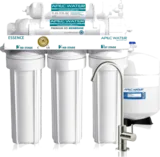 APEC ROES-50 APEC ROES-50 |
Maker claim | B | $231 | NSF/ANSI 58, NSF/ANSI 372 | Check price |
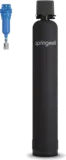 SpringWell WS1 SpringWell WS1 |
Maker claim | C | $2,231 | None | Check price |
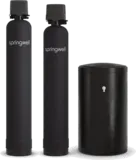 SpringWell WSSS1 SpringWell WSSS1 |
Maker claim | C | $3,124 | None | Check price |
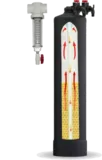 SoftPro Whole House Chlorine+ Filter (upflow catalytic carbon) SoftPro Whole House Chlorine+ Filter (upflow catalytic carbon) |
Maker claim | C | $917 | None | Check price |
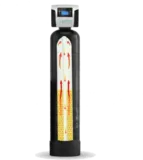 SoftPro Iron Master AIO SoftPro Iron Master AIO |
Maker claim | C | $1,517 | None | Check price |
 US Water Systems Flexx Oxi-Gen (081-FX) US Water Systems Flexx Oxi-Gen (081-FX) |
Maker claim | C | $2,230 | None | Check price |
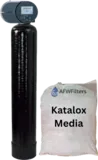 AFWFilters Air Injection Titanium 10 (AIT10-25SXT) AFWFilters Air Injection Titanium 10 (AIT10-25SXT) |
Maker claim | C | $1,289 | None | Check price |
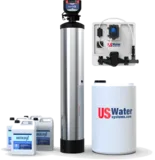 US Water Systems Matrixx InFusion (081-MIF) US Water Systems Matrixx InFusion (081-MIF) |
Maker claim | C | $2,983 | None | Check price |
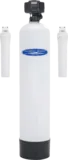 Crystal Quest Metal Removal Whole House Water Filter (CQE-WH-01195) Crystal Quest Metal Removal Whole House Water Filter (CQE-WH-01195) |
Maker claim | D | $1,331 | None | Check price |
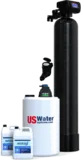 US Water Systems Flexx InFusion (081-FIF) US Water Systems Flexx InFusion (081-FIF) |
Maker claim | D | $2,255 | None | Check price |
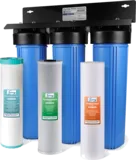 iSpring WGB32BM iSpring WGB32BM |
Maker claim | D | $536 | None | Check price |
Open these in the system finder
Common questions
Is manganese in well water dangerous?
At high levels, yes, especially for infants. MDH says infants may develop learning and behavior problems from too much manganese, and long-term high exposure can affect memory, attention and motor skills in children and adults.
What level of manganese is safe for a baby's formula?
EPA advises that infants under 6 months not drink water above 0.3 mg/L, even for 10 days. Minnesota's health department uses a stricter 0.1 mg/L guidance value when an infant drinks tap water or formula made with it, and WHO's guideline is 0.08 mg/L.
Why are my fixtures stained black?
Usually manganese, which EPA says causes black to brown color and black staining above its 0.05 mg/L secondary standard. Hydrogen sulfide can also leave black stains, so test for both.
Will a water softener remove manganese?
It can. An MDH study found softeners can be an effective way to reduce manganese. Higher levels, or manganese combined with a lot of iron, usually need an oxidizing filter.
Sources
- EPA: Secondary drinking water standards
- EPA: Drinking water health advisory for manganese
- Minnesota Department of Health: Manganese in drinking water
- WHO: Manganese chemical fact sheet (2022)
- Penn State Extension: Iron and manganese in private water systems
- USGS: Quality of water from domestic wells in principal aquifers, 1991-2004
- Minnesota Department of Health: Home water treatment (costs and options)
- Wisconsin Department of Health Services: Treatment devices for private well contaminants
- Wisconsin State Laboratory of Hygiene: Test prices (effective July 1, 2026)
- Penn State Agricultural Analytical Services Lab: Drinking water test packages