
Copper
Key facts
- Type of concern
- Health and household
- EPA limit
- 1.3 mg/L (Action level) The health goal (MCLG) is also 1.3 mg/L. Utilities must act if more than 10% of tap samples exceed it. EPA's non-enforceable secondary standard is 1.0 mg/L, for metallic taste and blue-green staining.
- Signs
- blue-green stains on sinks, tubs and fixtures; metallic or bitter taste; pinhole leaks or pitting in copper pipes
- Common in
- private wells and city water
- How to test
- A certified lab copper test on a first-draw sample, $38 at Wisconsin's state lab, or Penn State's $85 package, which adds pH, alkalinity, corrosivity, iron and manganese.
| Treatment | Effectiveness | Look for |
|---|---|---|
| Reverse osmosis | Works well | NSF/ANSI 58 |
| Activated carbon | Partial | NSF/ANSI 53 |
| Specialty media | Partial | - |
At a glance: Copper in tap water usually comes from copper pipes and fittings inside the home, dissolved by corrosive water. It causes blue-green stains and a metallic taste at lower levels, and stomach upset at higher ones. EPA’s health-based action level is 1.3 mg/L. The lasting fix is to make the water less corrosive or replace the plumbing; for drinking water now, a filter certified for copper at the kitchen tap works.
Stains alone do not tell you whether the water is unsafe. A first-draw test does.
What it is and where it comes from
Copper is a metal widely used in household plumbing. The Minnesota Department of Health says it “can get into your drinking water as the water passes through your household plumbing system,” and that corrosive water dissolves copper from pipes over time. EPA’s health table lists corrosion of household plumbing and erosion of natural deposits as the sources.
Corrosive water is the key. Low pH (acidic) water is the classic cause on private wells, and EPA’s secondary standards list low pH as causing a bitter metallic taste and corrosion. MDH advises flushing water that has sat unused for more than six hours, because standing water picks up more copper.
On city water, utilities must control corrosion under EPA’s Lead and Copper Rule. On private wells, the owner is responsible. EPA’s list of tests for private wells includes pH, lead and copper for homes with older plumbing, and corrosion for wells near mining.
Health and household effects
EPA’s health table describes two kinds of effects:
- Short term: gastrointestinal distress. MDH lists headaches, vomiting, diarrhea, stomach cramps and nausea.
- Long term: liver or kidney damage. MDH adds that long-term exposure can also harm red blood cells.
MDH says infants and people with Wilson’s disease are especially vulnerable. People with Wilson’s disease should talk with their doctor if water tests above the action level.
The household effects come first. EPA’s secondary standard of 1.0 mg/L is set for metallic taste and blue-green staining. MDH lists pinhole leaks, pitting in pipes, and blue-green stains on fixtures as signs of corrosive water, and notes that water high in copper can look blue.
Limits and what they mean
| Standard | Level | What it means |
|---|---|---|
| EPA health goal (MCLG) | 1.3 mg/L | Level with no expected health risk |
| EPA action level | 1.3 mg/L | Utilities must act if more than 10% of tap samples exceed it |
| EPA secondary standard | 1.0 mg/L | Guideline for taste and staining |
| WHO guideline | 2 mg/L | Health-based international guideline |
Unlike lead, copper has a health goal above zero. The action level triggers corrosion control by a utility. Private wells are not covered, so compare a well test with these numbers yourself.
How to test
Take a first-draw sample from water that has sat in the pipes for at least six hours, usually first thing in the morning, because that is when copper is highest. Wisconsin’s state lab charges $38 for copper. Penn State’s $85 package adds pH, alkalinity and a corrosivity index, which tell you whether the water itself is the cause.
If copper is high, test lead in the same round, since the same corrosive water attacks lead solder and brass. Our well testing guide covers labs and sampling.
Treatment options
| Method | How well it works | Certification to look for | Cost range |
|---|---|---|---|
| Reverse osmosis, point of use | High | NSF/ANSI 58, copper reduction | $300 to $1,500 |
| Carbon filter with a copper claim (activated carbon), point of use | Moderate to high for listed models | NSF/ANSI 53, copper reduction | $10 to $100 |
| Neutralizer for acidic well water (specialty media) | Reduces corrosion at the source | None common | Get a quote |
| Distillation, point of use | High | NSF/ANSI 62 | $300 to $1,200 |
| Flushing and using cold water | Lowers exposure | Not applicable | Free |
Cost ranges are Minnesota Department of Health estimates based on 2017 and 2018 quotes, low end self-installed and high end professionally installed.
Wisconsin’s health department lists both carbon filtration certified to NSF/ANSI 53 and reverse osmosis certified to NSF/ANSI 58 for copper. Check that the specific product lists copper, not just the standard number. The filter finder shows each product’s listed claims.
Treat the cause if you can. A point-of-use filter protects what you drink, but corrosive water keeps eating the pipes, which leads to leaks. On a well, fixing low pH protects both your health and your plumbing. Watch for side effects of other treatment too: MDH notes that softening and anion exchange can make water more corrosive.
For how point-of-use and whole-house approaches compare, see whole-house filter vs reverse osmosis.
When to call a professional
Call a water treatment professional if your well water is acidic or tests high for copper, to size a neutralizer or other corrosion control. Retest copper and lead afterward.
Call a licensed plumber if you see pinhole leaks, pitting or blue-green stains, which MDH lists as signs of corrosive water. On city water, call your utility if first-draw copper is above 1.3 mg/L; it is responsible for corrosion control in the water it delivers.
Systems in our database that address copper
| System | Evidence | Grade | Price | Certified to | |
|---|---|---|---|---|---|
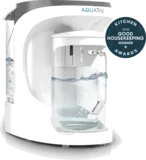 AquaTru Carafe (AT100 series) AquaTru Carafe (AT100 series) |
Certified | B | $375 | NSF/ANSI 42, NSF/ANSI 53, NSF/ANSI 58, NSF/ANSI 401, NSF/ANSI 372 | Check price |
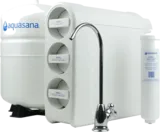 Aquasana SmartFlow Reverse Osmosis (AQ-SFRO2) Aquasana SmartFlow Reverse Osmosis (AQ-SFRO2) |
Certified | B | $190 | NSF/ANSI 42, NSF/ANSI 53, NSF/ANSI 58, NSF/ANSI 401, CSA B483.1, NSF/ANSI 372 | Check price |
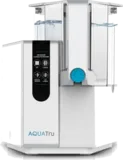 AquaTru Classic (AT2000 series) AquaTru Classic (AT2000 series) |
Certified | B | $475 | NSF/ANSI 42, NSF/ANSI 53, NSF/ANSI 58, NSF/ANSI 401, NSF/ANSI 372 | Check price |
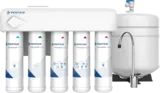 Pentair FreshPoint GRO-575B (161112) Pentair FreshPoint GRO-575B (161112) |
Certified | B | $722 | NSF/ANSI 58, NSF/ANSI 53, NSF/ANSI 42, NSF/ANSI 401, CSA B483.1, NSF/ANSI 53, NSF/ANSI 372 | Check price |
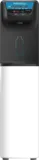 AquaTru Freestanding Model 1 (ATFS-1-W) AquaTru Freestanding Model 1 (ATFS-1-W) |
Certified | C | $1,699 | NSF/ANSI 42, NSF/ANSI 53, NSF/ANSI 58, NSF/ANSI 401 | Check price |
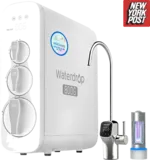 Waterdrop G3P800 (WD-G3P800-W) Waterdrop G3P800 (WD-G3P800-W) |
Lab tested | B | $999 | NSF/ANSI 58, NSF/ANSI 53, NSF/ANSI 42, NSF/ANSI 372 | Check price |
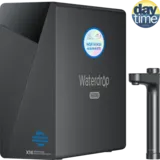 Waterdrop X16 (WD-X16) Waterdrop X16 (WD-X16) |
Lab tested | C | $1,999 | NSF/ANSI 58, NSF/ANSI 42, NSF/ANSI 372 | Check price |
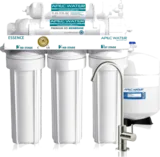 APEC ROES-50 APEC ROES-50 |
Maker claim | B | $231 | NSF/ANSI 58, NSF/ANSI 372 | Check price |
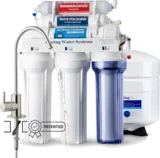 iSpring RCC7AK iSpring RCC7AK |
Maker claim | C | $242 | NSF/ANSI 58 | Check price |
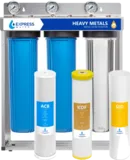 Express Water WH300SCKS Express Water WH300SCKS |
Maker claim | D | $548 | None | Check price |
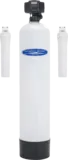 Crystal Quest SMART Whole House Water Filter (CQE-WH-01114) Crystal Quest SMART Whole House Water Filter (CQE-WH-01114) |
Maker claim | D | $1,791 | None | Check price |
Open these in the system finder
Common questions
Why is there copper in my water?
Usually from your own plumbing. MDH says copper gets into drinking water as water passes through household plumbing, and corrosive water dissolves more of it. EPA also lists erosion of natural deposits as a source.
Are blue-green stains in my sink a health problem?
They are a sign of copper, and EPA's secondary standard for staining is 1.0 mg/L. The health question is how much copper is in the water you drink, so test a first-draw sample; the health-based action level is 1.3 mg/L.
How can I reduce copper without buying a filter?
MDH advises running the water for 30 to 60 seconds if it has not been used for more than six hours, and using cold water for drinking, cooking and baby formula.
Can a water softener cause copper problems?
It can contribute. MDH notes that water softening may affect how corrosive your water is and can corrode pipes, which is a concern with copper or lead plumbing.
Sources
- EPA: National primary drinking water regulations (copper)
- EPA: Secondary drinking water standards
- EPA: Lead and Copper Rule
- Minnesota Department of Health: Copper in drinking water
- WHO: Guidelines for drinking-water quality, 4th edition incorporating the first and second addenda
- Minnesota Department of Health: Home water treatment (costs and options)
- Wisconsin Department of Health Services: Treatment devices for private well contaminants
- Wisconsin State Laboratory of Hygiene: Test prices (effective July 1, 2026)
- Penn State Agricultural Analytical Services Lab: Drinking water test packages
- NSF: Certified drinking water treatment units listings (copper claims under NSF/ANSI 53 and 58)
- EPA: Protect your home's water (private wells)