
Sediment
Key facts
- Type of concern
- Household (aesthetic)
- EPA limit
- No limit for household water Public water systems must meet a turbidity treatment technique because turbidity is associated with disease-causing organisms. EPA's secondary standards cover color (15 color units) and total dissolved solids (500 mg/L).
- Signs
- cloudy or muddy water; sand or grit in faucet aerators and toilet tanks; clogged screens on appliances and fixtures
- Common in
- private wells and city water
- How to test
- Let a clear glass of water stand and watch what settles; a lab turbidity or TDS test confirms it (TDS is in Penn State's $60 standard package), and a well contractor can inspect the well with a downhole camera.
| Treatment | Effectiveness | Look for |
|---|---|---|
| Sediment filtration | Works well | NSF/ANSI 42 |
| Activated carbon | Limited | - |
| Reverse osmosis | Partial | NSF/ANSI 58 |
At a glance: Sediment is sand, silt, clay, rust or other particles carried in water. It is mostly a nuisance that clogs aerators, wears out valves and stains fixtures, but cloudiness can hide germs from disinfection. On a well, new or increasing sand usually means something is wrong with the well or pump, so have it inspected before you buy filters. For steady, light sediment, a whole-house sediment filter is cheap and effective.
On city water, persistent cloudiness or grit is worth a call to your utility, which has to meet a turbidity standard at the treatment plant.
What it is and where it comes from
“Sediment” covers anything solid enough to settle out or be filtered: sand and silt from the aquifer, clay that makes water cloudy, scale flakes, and rust particles from iron in the water or corroding pipes. Turbidity is the measure of how cloudy water looks, reported in nephelometric turbidity units (NTU).
In wells, sand often points to a problem underground. Penn State Extension lists “increased sand or sediment content in the water (cloudiness)” as a sign that a well or pump needs attention, alongside dropping flow and water level. It notes that corroded, enlarged well screen openings can lead to sand pumping.
Some “sediment” is really iron or manganese. If particles are orange, brown or black, or the water turns rusty after standing, you are looking at dissolved metals that oxidize, which need different treatment. See our iron in well water guide.
Health and household effects
EPA’s health table lists turbidity as “associated with disease-causing organisms,” with effects such as nausea, cramps and diarrhea, and gives soil runoff as the usual source. The particles are rarely the problem themselves. The concern is what can travel with them, and that particles can shield bacteria from UV light, which is why Penn State says water entering a UV unit must be clear.
The household effects are what most people notice:
- Pump wear. Penn State says abrasive deterioration from sand pumping is the leading cause of well pump failure.
- Clogging. Faucet aerators, showerheads, and valves in washing machines, dishwashers and toilets.
- Downstream equipment. Sediment clogs filter media and makes UV less effective.
- Appearance. Cloudy or discolored water, and grit in toilet tanks.
Limits and what they mean
| Standard | Level | What it means |
|---|---|---|
| EPA turbidity treatment technique | Applies to public systems | Utilities must meet turbidity limits at the plant |
| EPA secondary standard, color | 15 color units | Visible tint; guideline only |
| EPA secondary standard, total dissolved solids | 500 mg/L | Deposits and staining; guideline only |
| MDH guidance for UV | Pre-filter above 1 NTU | Practical threshold for disinfection equipment |
There is no federal limit for sediment in household water, and private wells are not covered by federal rules. The practical threshold is what your equipment needs: UV and some filters list a maximum turbidity.
How to test
Start with a clear glass. Fill it from an untreated cold tap, let it stand, and look at what settles and how fast. Sand drops in seconds; silt and clay take longer or stay cloudy; rusty particles that appear only after standing mean iron.
For a number, ask a certified lab for turbidity or total dissolved solids. Penn State’s $60 standard package includes TDS with coliform, E. coli and pH. Test for bacteria at the same time: the CDC recommends testing a well again whenever its taste, color or smell changes. Our well testing guide covers labs and sampling.
Treatment options
| Method | How well it works | Certification to look for | Cost range |
|---|---|---|---|
| Whole-house sediment filter cartridge | High for particles above its rating | NSF/ANSI 42 nominal particulate reduction | $517 to $548 for three-stage systems we track; cartridges about $21 each |
| Two-stage sediment (coarse, then fine) | High for heavy or mixed sediment | NSF/ANSI 42 | Varies with housings and cartridges |
| Activated carbon | Low; clogs without a pre-filter | Not applicable | Not a sediment fix |
| Reverse osmosis, point of use | Moderate; needs pre-filtration | NSF/ANSI 58 turbidity reduction | $300 to $1,500 |
The three-stage systems we track (iSpring WGB32B and WGB32BM, Express Water WH300SCKS) each start with a 5-micron sediment stage; prices checked September 2026. The RO range is a Minnesota Department of Health estimate based on 2017 and 2018 quotes.
A sediment filter is also the first stage in most treatment trains. It goes before iron filters, softeners, carbon and UV, and protects each of them. Our well water filter picks and whole-house filter picks note which systems include one, and the filter finder sorts by problem.
Watch the replacement cost. If a cartridge clogs in weeks, the filter is treating a well problem. Fix the well, or add a coarser stage in front, before you commit to monthly cartridges.
When to call a professional
Call a licensed well contractor if sand appears suddenly, gets worse, or comes with lower flow or pressure. Penn State recommends a professional inspection, preferably with a downhole camera, when a well loses performance. Pumping sand wears out the pump, so waiting costs money.
Call your utility if city water stays cloudy or gritty, and a plumber to install whole-house housings with a bypass so you can change cartridges without shutting off the house.
Systems in our database that address sediment
| System | Evidence | Grade | Price | Certified to | |
|---|---|---|---|---|---|
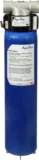 Aqua-Pure (formerly 3M Aqua-Pure, Solventum) AP904 Aqua-Pure (formerly 3M Aqua-Pure, Solventum) AP904 |
Certified | B | $432 | NSF/ANSI 42 | Check price |
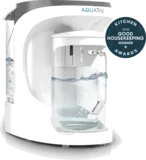 AquaTru Carafe (AT100 series) AquaTru Carafe (AT100 series) |
Certified | B | $375 | NSF/ANSI 42, NSF/ANSI 53, NSF/ANSI 58, NSF/ANSI 401, NSF/ANSI 372 | Check price |
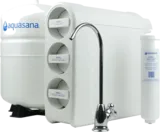 Aquasana SmartFlow Reverse Osmosis (AQ-SFRO2) Aquasana SmartFlow Reverse Osmosis (AQ-SFRO2) |
Certified | B | $190 | NSF/ANSI 42, NSF/ANSI 53, NSF/ANSI 58, NSF/ANSI 401, CSA B483.1, NSF/ANSI 372 | Check price |
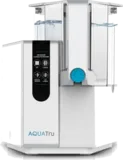 AquaTru Classic (AT2000 series) AquaTru Classic (AT2000 series) |
Certified | B | $475 | NSF/ANSI 42, NSF/ANSI 53, NSF/ANSI 58, NSF/ANSI 401, NSF/ANSI 372 | Check price |
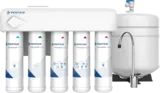 Pentair FreshPoint GRO-575B (161112) Pentair FreshPoint GRO-575B (161112) |
Certified | B | $722 | NSF/ANSI 58, NSF/ANSI 53, NSF/ANSI 42, NSF/ANSI 401, CSA B483.1, NSF/ANSI 53, NSF/ANSI 372 | Check price |
 AquaTru Freestanding Model 1 (ATFS-1-W) AquaTru Freestanding Model 1 (ATFS-1-W) |
Certified | C | $1,699 | NSF/ANSI 42, NSF/ANSI 53, NSF/ANSI 58, NSF/ANSI 401 | Check price |
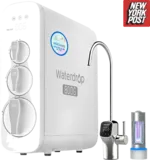 Waterdrop G3P800 (WD-G3P800-W) Waterdrop G3P800 (WD-G3P800-W) |
Lab tested | B | $999 | NSF/ANSI 58, NSF/ANSI 53, NSF/ANSI 42, NSF/ANSI 372 | Check price |
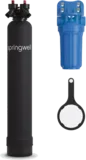 SpringWell FS1 SpringWell FS1 |
Maker claim | B | $1,785 | None | Check price |
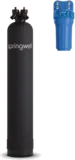 SpringWell CF1 SpringWell CF1 |
Maker claim | B | $1,160 | None | Check price |
| Home Master HMF3SdgFeC | Maker claim | B | $550 | None | Check price |
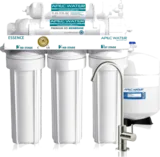 APEC ROES-50 APEC ROES-50 |
Maker claim | B | $231 | NSF/ANSI 58, NSF/ANSI 372 | Check price |
| Home Master TMAFC | Maker claim | B | $330 | None | Check price |
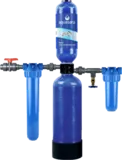 Aquasana Rhino WH-1000 (Max Flow WH-1010) Aquasana Rhino WH-1000 (Max Flow WH-1010) |
Maker claim | B | $999 | None | Check price |
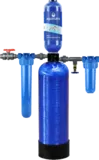 Aquasana Rhino Chloramines WH-1011 (Max Flow WH-1021) Aquasana Rhino Chloramines WH-1011 (Max Flow WH-1021) |
Maker claim | B | $1,399 | None | Check price |
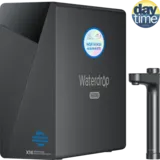 Waterdrop X16 (WD-X16) Waterdrop X16 (WD-X16) |
Maker claim | C | $1,999 | NSF/ANSI 58, NSF/ANSI 42, NSF/ANSI 372 | Check price |
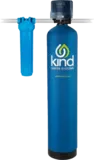 Kind Water Systems S-500 Kind Water Systems S-500 |
Maker claim | C | $1,471 | None | Check price |
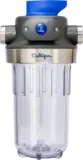 Culligan WH-HD200-C Culligan WH-HD200-C |
Maker claim | C | $74 | None | Check price |
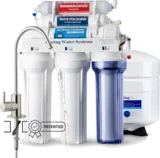 iSpring RCC7AK iSpring RCC7AK |
Maker claim | C | $242 | NSF/ANSI 58 | Check price |
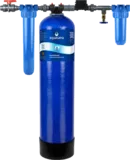 Aquasana HealthShield WH-HS Aquasana HealthShield WH-HS |
Maker claim | C | $2,099 | NSF/ANSI 53, NSF/ANSI 401, CSA B483.1 | Check price |
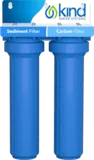 Kind Water Systems E-1000 Kind Water Systems E-1000 |
Maker claim | C | $976 | None | Check price |
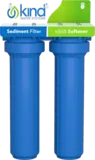 Kind Water Systems E-2000 Kind Water Systems E-2000 |
Maker claim | C | $1,353 | None | Check price |
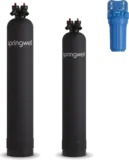 SpringWell CSF1 SpringWell CSF1 |
Maker claim | C | $2,321 | None | Check price |
 RKIN CS8 / CS9 / CS10 / CS13 RKIN CS8 / CS9 / CS10 / CS13 |
Maker claim | C | $938 | None | Check price |
 Aquasana Salt-Free Water Conditioner WH-SFWC-S Aquasana Salt-Free Water Conditioner WH-SFWC-S |
Maker claim | C | $879 | None | Check price |
 Aquasana Rhino Well Water with UV WH-WELL-UVS (WH-WELL-UV) Aquasana Rhino Well Water with UV WH-WELL-UVS (WH-WELL-UV) |
Maker claim | C | $1,749 | None | Check price |
 Watts OneFlow+ OFPSYS Watts OneFlow+ OFPSYS |
Maker claim | C | $829 | NSF/ANSI 372 (lead-free materials only) | Check price |
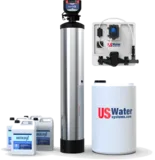 US Water Systems Matrixx InFusion (081-MIF) US Water Systems Matrixx InFusion (081-MIF) |
Maker claim | C | $2,983 | None | Check price |
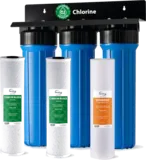 iSpring WGB32B iSpring WGB32B |
Maker claim | D | $517 | None | Check price |
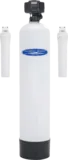 Crystal Quest Metal Removal Whole House Water Filter (CQE-WH-01195) Crystal Quest Metal Removal Whole House Water Filter (CQE-WH-01195) |
Maker claim | D | $1,331 | None | Check price |
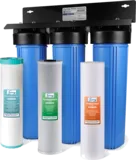 iSpring WGB32BM iSpring WGB32BM |
Maker claim | D | $536 | None | Check price |
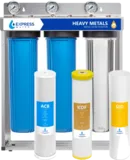 Express Water WH300SCKS Express Water WH300SCKS |
Maker claim | D | $548 | None | Check price |
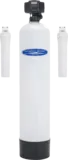 Crystal Quest SMART Whole House Water Filter (CQE-WH-01114) Crystal Quest SMART Whole House Water Filter (CQE-WH-01114) |
Maker claim | D | $1,791 | None | Check price |
Open these in the system finder
Common questions
Is sediment in water harmful?
The particles themselves are mostly a nuisance, but EPA links turbidity (cloudiness) to disease-causing organisms, and particles can shield germs from UV disinfection. If sediment appears suddenly in a well, test for bacteria too.
Why did my well start pumping sand?
Penn State lists increased sand or cloudiness as a sign the well or pump needs attention, and says corroded, enlarged well screen openings can lead to sand pumping. A well contractor should inspect it before you add filters.
What micron sediment filter do I need?
It depends on the particles. The whole-house cartridge systems we track use a 5-micron sediment stage. If a fine cartridge clogs within weeks, add a coarser stage in front rather than changing cartridges constantly.
Do I need a sediment filter before a UV system?
Usually yes. Penn State says water entering a UV unit must be clear and free of suspended sediment, and MDH advises pre-filtration when turbidity is above 1 NTU.
Sources
- EPA: National primary drinking water regulations (turbidity)
- EPA: Secondary drinking water standards
- Penn State Extension: Water well maintenance and rehabilitation
- Penn State Extension: Coliform bacteria (UV pretreatment)
- Minnesota Department of Health: Home water treatment (costs and options)
- Minnesota Department of Health: Iron in well water
- NSF: Certified drinking water treatment units listings (particulate and turbidity claims)
- Penn State Agricultural Analytical Services Lab: Drinking water test packages
- CDC: Guidelines for testing well water